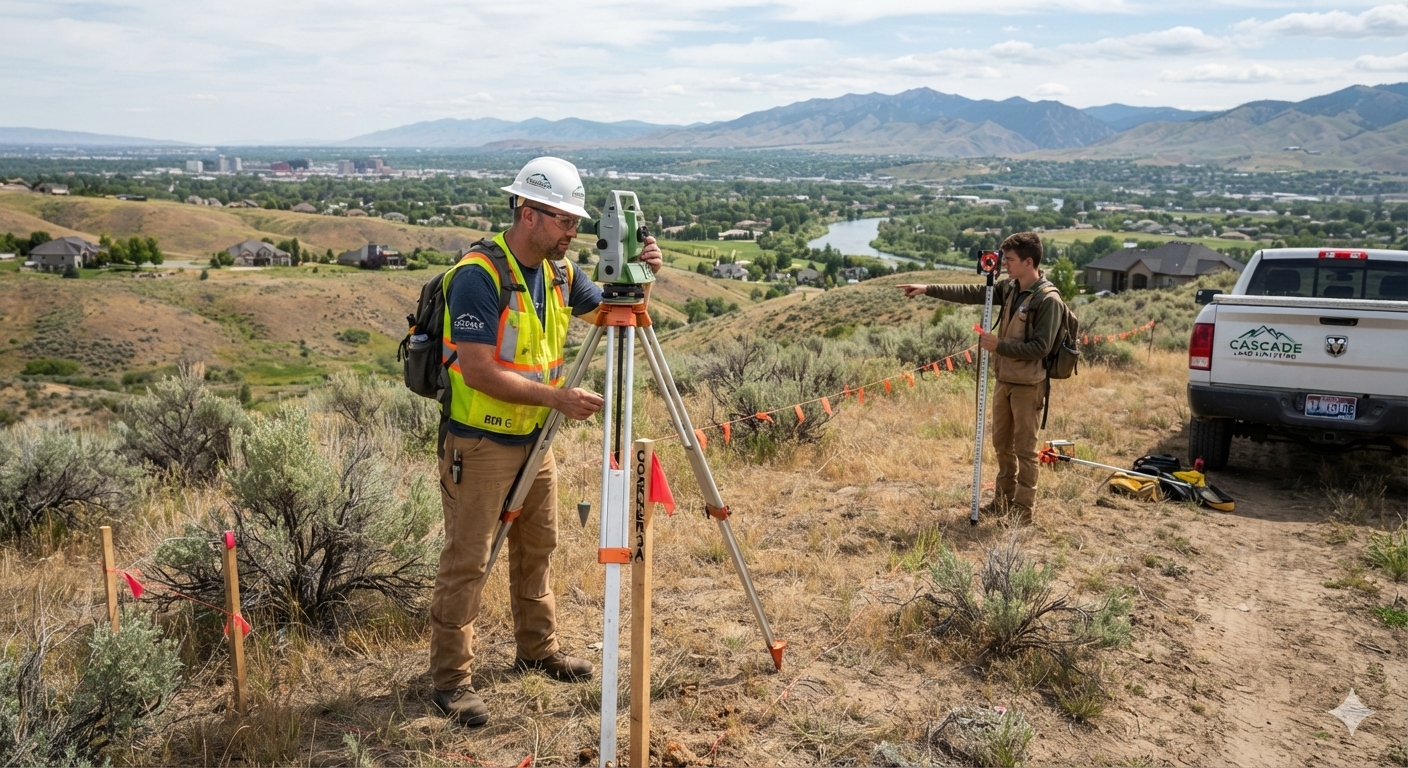
Before you can pull a residential permit and pour a foundation, a parcel of land must meet specific legal and physical requirements. Determining what makes land truly buildable requires a structured review of local zoning laws, property setbacks, easements, and slope challenges. This step-by-step checklist details the exact physical items homeowners need to verify before construction can safely begin on an Idaho property.
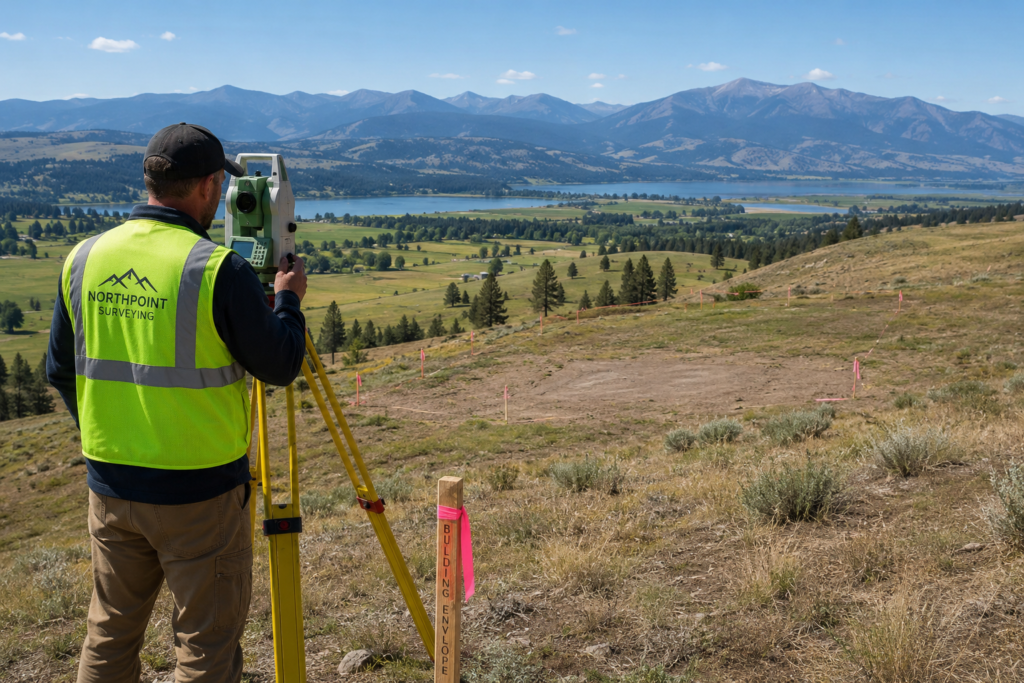
Buildable Land in Idaho Starts With More Than Lot Size
A large parcel is not automatically buildable.
Some acreage properties have plenty of land on paper, but only part of the property may work for a home. Slope, access, soil conditions, irrigation, drainage, easements, utilities, setbacks, and septic reserve areas can all limit where the house can sit.
Before assuming a property is ready to build, homeowners should look at how the land actually functions. The best homesite is not always the flattest spot, the highest point, or the area with the best view.
Buildable land in Idaho needs enough usable space for the home, driveway, utilities, septic system, well, drainage, outdoor living, and future property use.
If you have trailers that will use the driveway, you may need a properly sized turnaround area. If you plan to host large events at your home, you may also need enough parking space for guests to drive through and park comfortably.
Zoning and Setbacks Can Affect Buildable Land in Idaho
Zoning helps determine how a property can be used.
For example, a property categorized as Residential Estate Zone 1, or R-1, may allow low-density home building. This could mean one dwelling per five acres or one dwelling per acre, depending on the jurisdiction. Just because there is room to build does not mean you can legally build the home you want.
Depending on the location, zoning may affect whether a single-family home is allowed. It may also affect how many structures can be built, what setbacks apply, whether animals or agricultural uses are allowed, and whether the project needs additional approvals.
If your property has conditions, covenants, and restrictions, also called CC&Rs, you may face additional limitations. These may affect agricultural animals, trailer height, outbuildings, fencing, exterior materials, or other property uses.
Setbacks Can Reduce the Buildable Area
Setbacks can reduce the usable building area.
A property may need to maintain distance from property lines, roads, irrigation ditches, canals, waterways, septic systems, wells, easements, or other site features. Building departments, irrigation districts, utility companies, and other jurisdictions may all influence setback requirements.
Because zoning and setback rules vary by city, county, and property type, homeowners should verify local requirements before purchasing land or finalizing a design.
At Idaho Impact Homes, we recommend that buyers verify whether the land can receive a building permit for the type of structure they want to build. A local real estate brokerage, title company, or Planning and Zoning Department may be able to help find this information. You will usually need the parcel number for the property.
Access Matters for Buildable Land in Idaho
A property needs safe, legal, and practical access before construction can move forward.
Some parcels already have an approved driveway or road approach. Others need a new approach, private road approval, right-of-way permit, culvert, ditch crossing, or access agreement.
The road department may need to approve the access location and conduct a site visit. They will check whether the requested location meets local requirements.
Idaho Impact Homes can often move permits along more quickly when the access is controlled by a city or county department. If the property connects to a state highway, the access permit process can take much longer.
State Highway Access Can Take Longer
If the property connects to a state highway, the Idaho Transportation Department may need to review the access. ITD provides right-of-way permits for approaches, encroachments, utilities, and related access needs.
If the property connects to a county road or private road, the process may involve a different agency or approval path.
State highways usually carry more traffic than county roads. Because of that, ITD may need to conduct traffic studies. They may review expected left turns, school bus stops, sight distance, blind hills, and other safety concerns.
If ITD requires road widening or a turn lane, utilities may need to move. This can add time, approvals, and cost. In that situation, the homeowner may need approval from each utility provider and may also need to pay for the relocation work.
Construction Access Matters Too
Access affects more than daily driving.
Concrete trucks, well drillers, septic installers, utility crews, framing deliveries, and emergency vehicles all need safe access to the building site.
If the best homesite sits far from the road, driveway costs, utility costs, grading, drainage, and fire access requirements can increase. Large, heavy trucks may also need temporary construction access to deliver materials and equipment. This helps prevent unnecessary damage to existing roads, culverts, and utilities. It can also help prevent vehicles from getting stuck.
Septic Feasibility Can Determine Buildability
If city sewer is not available, septic feasibility becomes one of the most important buildability questions.
A septic system needs suitable soil, enough space, proper setbacks, and an approved location for the tank and drain field. To receive septic approval from a health department, such as Southwest District Health, the design must usually show a replacement drain field area.
A replacement area matters because the drain field can become less efficient over time. If that happens, the septic tank may need to connect to the replacement drain field. In some cases, the original drain field may be used again after the replacement field has had time to recover.
The Idaho Department of Environmental Quality explains that Idaho’s Individual/Subsurface Sewage Disposal Rules set minimum standards for the design, construction, siting, and use of individual septic systems. These rules also include permit requirements for installation and installer registration.
Perc Testing Helps Determine Septic Design
One way the health department evaluates septic suitability is through percolation testing.
This testing helps the designer understand water level and soil types at specific depths. If the water table is high or the soil does not drain well enough, the property may need a more complex septic system. That can add cost.
Septic placement can also affect home placement, well location, driveway layout, outdoor living areas, future shops, landscaping, and usable acreage.
A septic drain field is usually shallow. Homeowners should avoid driving over it with vehicles or heavy equipment. Because of that, the drain field needs a location that will stay protected.
Check Septic Before Closing
A property may look buildable until the septic system is evaluated.
This is why septic feasibility should be checked early, especially when buying acreage. If you are still looking for land or have not yet made an offer, you may be able to complete percolation testing before closing.
A realtor can add a condition to the offer that allows access to the property for soil testing. Once the health department provides design requirements, you can determine what type of system the property can support. You can also understand how much room the system will need.
If the soil conditions do not work for your needs, you may be able to cancel the contract, depending on the terms of your offer.
Water Access Matters for Buildable Land in Idaho
Buildable land in Idaho also needs a water source.
Some properties connect to city water or a shared system. Others require a private well. If the property needs a private well, homeowners should consider well depth, water quality, drilling access, pump needs, water rights, and distance from the well to the home.
The Idaho Department of Water Resources provides well resources, including well records and mapping tools. Nearby well logs can help homeowners understand common well depths, flow rates, geology, and water levels in the area. They cannot guarantee what a new well will require, but they can provide helpful context.
A well driller may also be able to provide a quote if you give them the parcel number or address. By reviewing nearby well reports, the driller can see common soil types and estimate the approximate depth needed.
Domestic Wells Do Not Allow Unlimited Irrigation
Water use matters for acreage owners.
A private domestic well does not automatically allow unlimited irrigation. Homeowners who plan to irrigate pasture, support livestock, maintain large lawns, or use water for agricultural purposes should verify whether the property has irrigation water rights, canal access, or another legal water source.
In Idaho, a domestic well can only irrigate up to 0.5 acres. If you plan to irrigate more than that, you will need another water source, such as canal water or separate irrigation rights.
Power Availability Can Affect Buildable Land in Idaho
Nearby power does not always mean inexpensive power.
Power to land in Idaho can depend on distance from existing infrastructure, utility company requirements, transformer needs, overhead versus underground service, easements, trenching, and temporary construction power.
Sometimes a new home draws enough power to require an existing transformer upgrade. That may also require a pole upgrade so the pole can support the weight of the larger equipment.
A homesite far from the road may offer better privacy or views. It may also require a longer power route. If the property needs an extension from existing electrical infrastructure, the cost and timeline can increase.
Utility Easements Can Affect Buildability
Power access may also require a new right-of-way.
Sometimes a utility line needs to cross a neighboring property. In that case, the property owner must usually grant permission. Some neighbors may react negatively to a new home build and make access agreements difficult. Others may refuse an agreement entirely.
Before buying land, ask whether the property needs a utility easement across neighboring land. If it does, try to get written permission before closing. If the neighbor refuses and the property cannot receive electrical service, you may need to reconsider the purchase.
Power planning should happen alongside driveway, well, septic, drainage, and home placement decisions. When utilities are planned together, the project can avoid unnecessary trenching, routing conflicts, and delays.
Sometimes an electrical line or sprinkler line needs to cross under a roadway or sidewalk. In that case, Idaho Impact Homes may install a sleeve under the driveway. This allows cables or pipes to pass through without trenching around the entire house later.
Slope, Drainage, and Soil Conditions Matter
The shape and condition of the land can affect both buildability and cost.
Slope can influence foundation design, excavation, retaining walls, driveway grade, drainage, septic feasibility, and utility installation. A sloped property may still be buildable, but it may need more planning and a larger site development budget.
If excavation is needed on sloped land, excavators may need to move much more material. Sometimes crews must truck that material off site because the property does not have enough room for the spoils. Trucking materials off site can become a major expense. Buyers should account for this before closing on land.
Drainage is also important. Water needs to move away from the home, driveway, septic system, and outdoor living areas. Poor drainage can create erosion, standing water, driveway damage, foundation concerns, and long-term maintenance problems.
If water pools in the wrong areas, it can affect yard conditions, septic longevity, and driveway stability. Many solutions can help manage water runoff. However, buyers should verify that those options are available before assuming the site will work.
Soil Conditions Can Affect Cost
Soil conditions matter as well.
Rock, clay, sand, high groundwater, or unstable soil can affect excavation, septic approval, foundation design, and utility trenching.
Just as the health department conducts soil testing, buyers can also hire a company to complete soil testing. The best time to do this is usually when you are under contract to purchase the land, but before you close.
If soil reports show conditions that do not work for your needs, you may want to cancel the contract, depending on your purchase terms.
Easements, Irrigation, and Water Rights Should Be Checked
Easements can limit how a property can be used.
A property may have utility easements, access easements, irrigation easements, shared driveway agreements, canal rights-of-way, or private road agreements. These can affect where the home, driveway, septic system, well, landscaping, and future shops can go.
Utility easements usually require access for maintenance and repair. This may prevent you from building on that portion of land. You also may not be able to install a locked gate that prevents utility workers from accessing their equipment.
Irrigation is another important consideration for acreage. If the property includes irrigation water, homeowners should confirm where the water comes from, how it is delivered, when it is available, how much can be used, and whether any maintenance responsibilities come with it.
Irrigation Access Can Affect Property Use
If irrigation equipment crosses another person’s property, you need to understand your access rights.
You must be able to access and maintain all parts of the irrigation system in order to maintain water delivery to your property. If the neighboring property owner does not want to grant a right-of-way for irrigation equipment, the property may not work the way you need it to.
Before buying land, homeowners should understand the rights, restrictions, and agreements that come with the property. A real estate broker, title company, or city/county Planning and Zoning Department can help you find this information.
Make sure the professionals helping you understand exactly how you want to use the land and what type of home you plan to build.
Permits and Jurisdictions Can Affect the Timeline
Buildable land in Idaho may involve several agencies.
Depending on the property, homeowners may need approvals from a city, county, highway district, health district, irrigation district, utility company, fire district, or state agency.
Permitting can involve building permits, septic permits, driveway or approach permits, well drilling permits, floodplain review, grading permits, utility approvals, or engineering review.
Because many jurisdictions can affect buildability, it helps to hire a builder who understands the approval process. Idaho Impact Homes has developed many properties. Our familiarity with the process and requirements can save time and money for our clients.
A property that looks simple may still take time to prepare for construction. Each agency may have its own requirements, timeline, and review process.
How Buildable Land in Idaho Affects Home Placement
Home placement should respond to the land, not the other way around.
The best location for a custom home balances access, views, privacy, sunlight, wind, drainage, septic placement, well location, power route, driveway cost, outdoor living, and future use of the property.
A floor plan that works well on one property may not work well on another. The land should influence the orientation, layout, garage placement, window placement, patio location, and overall design.
When the land and home are planned together, the project can feel more intentional and function better long term.
Common Issues That Can Make Land Harder to Build On
Many buildability issues can be discovered before construction begins.
Common concerns include:
No legal access
Long or expensive driveway route
Unclear zoning or setbacks
Poor septic feasibility
No practical well location
Limited water rights
Power too far from the homesite
Steep slope
Drainage problems
High groundwater
Rock or difficult soil conditions
Floodplain concerns
Easements that limit the build area
Irrigation conflicts
Private road approval issues
Fire access limitations
Utility routing conflicts
These issues do not always mean the land cannot be built on. However, they can affect cost, timeline, design, and whether the property is right for the homeowner’s goals.
How Idaho Impact Homes Helps Evaluate Buildable Land in Idaho
Every Idaho Impact Homes project begins with understanding the property.
Before construction begins, we look at the site as a whole. This includes access, driveway planning, septic feasibility, well placement, power routes, drainage, grading, home orientation, outdoor living, and future property use.
Buildable land in Idaho is easier to evaluate when the home, site costs, utilities, and design goals are reviewed together.
FAQ
What makes land buildable in Idaho?
Buildable land in Idaho usually needs legal access, proper zoning, enough usable space, septic feasibility or sewer access, water access, power availability, suitable drainage, and a practical homesite.
Should I check buildability before buying land?
Yes. Buyers should review access, zoning, septic, wells, power, drainage, easements, and water rights before purchasing acreage or rural property.
Does acreage always mean the land is buildable?
No. A large parcel may still have limits because of slope, setbacks, easements, irrigation, septic requirements, drainage, floodplain concerns, or utility access.
Can septic affect whether land is buildable?
Yes. If the property does not have sewer access, septic feasibility can determine whether the land can support the home you want to build.
Can Idaho Impact Homes help evaluate land before I buy?
Yes. Idaho Impact Homes can help evaluate acreage and rural property before you buy or before you finalize the design for your custom home.
Planning to Build on Land in Idaho?
If you are evaluating acreage in Caldwell, Nampa, Middleton, Star, Eagle, Kuna, Boise, or the surrounding Treasure Valley, Idaho Impact Homes can help you understand whether the property is practical for the home you want to build.
Contact Idaho Impact Homes to schedule a consultation and review access, utilities, septic, wells, power, drainage, and other site planning considerations before construction begins.