When you build a custom home on acreage, power to land in Idaho is one of the most important site costs to understand early. Many land buyers assume nearby power makes electrical service simple. In reality, distance, utility access, trenching, transformers, easements, and scheduling can all affect the budget and timeline.
Power affects more than the electrical panel. It can influence home placement, driveway layout, well location, construction access, temporary power, and how the property functions long term.
At Idaho Impact Homes, we look at power routes as part of the overall site planning process. We want the home, driveway, well, septic system, grading, drainage, and utility routes to work together before construction begins.
Power to Land in Idaho Starts With Utility Access
Before construction begins, the property needs a clear plan for electrical service.
Some properties already have power at the road or near the homesite. Others may need a new service extension, additional poles, underground conduit, trenching, transformer placement, or easements before the home can receive power.
Sometimes existing electrical transformers or other equipment need upgrades to meet the new electrical demand. In some cases, Idaho Power may also require pole or wire upgrades.
The first step is identifying the nearest available power source and confirming which utility company serves the property. In the Treasure Valley, Idaho Power Corporation provides electrical service for many properties. When designing a new service, the power company meets with Idaho Impact Homes on site to determine the type, location, and design of the electrical lines.
Power to land in Idaho can cost more when the homesite sits far from the road or existing electrical infrastructure. A private, scenic homesite may offer better views, but it can also require a longer utility run.
Sometimes rural properties require an extension of the existing primary power circuit. This can consume a large part of the construction budget. When a line extension from the existing primary electrical lines does not make sense financially, homeowners may need to explore other options, such as solar or another power solution.
Main Costs When Bringing Power to Land in Idaho
The cost of bringing power to land can vary widely from one property to another.
Common power-related costs may include:
Utility service application
Engineering or utility design
New service extension
Poles, if overhead power is used
Transformer installation or upgrade
Underground conduit
Trenching
Backfill
Meter base
Temporary construction power
Easement coordination
Electrical contractor work
Inspection coordination
Distance, utility provider requirements, overhead versus underground service, transformer needs, site access, and the final power route all affect the cost.
Homeowners should review power before finalizing the home location. Moving the house farther from existing power may increase site development costs.
How Distance Affects Power to Land in Idaho
One of the biggest factors in power to land in Idaho is the distance between the house and existing Idaho Power Corporation infrastructure.
If power already reaches the homesite, the process may stay more straightforward. If the nearest power source sits far away, the project may need a longer service extension, additional infrastructure, or more trenching.
One way to reduce the cost of a long electrical run may be to run wires overhead instead of underground. Overhead power lines usually sit near the roadway so maintenance crews can access them easily.
When deciding where to place overhead power lines, homeowners should consider wire height and the areas where traffic, equipment, or tall structures may pass underneath. Idaho Power requires a minimum of 16 feet of clearance from the road to overhead wires. Taller poles may be needed on either side of these areas to maintain proper clearance, which can increase costs.
For acreage properties, home placement and power planning should happen together. All of the planning for the placements take place during our design process. The location that feels ideal for privacy or views may create a larger utility cost than expected.
Sometimes underground power does not make sense because of the cost. In that case, overhead service may be the better option. If overhead service makes the most sense, homeowners should think carefully about views from inside the home and outdoor living areas. Thoughtful placement can help reduce visual clutter from power lines and preserve the best views.
Overhead vs. Underground Power to Land in Idaho
Power may reach a home through overhead lines, underground lines, or a combination of both.
In the electrical utility industry, there are three types of power: transmission, primary, and service. A new connection to a home usually involves primary and secondary service lines. Overhead primary lines typically carry higher voltage. A transformer then steps that power down to 120/240 volts for use inside the home.
Overhead power may cost less in some situations, especially when poles already exist nearby. Utility crews may also access overhead lines more easily for future repairs. However, this option can create visual clutter and may affect how the land can be used because of pole locations or low-hanging wires.
Underground power often looks cleaner and may fit better with custom homes, acreage entrances, and long-term aesthetics. However, underground service can require trenching, conduit, backfill, and careful coordination with other utilities.
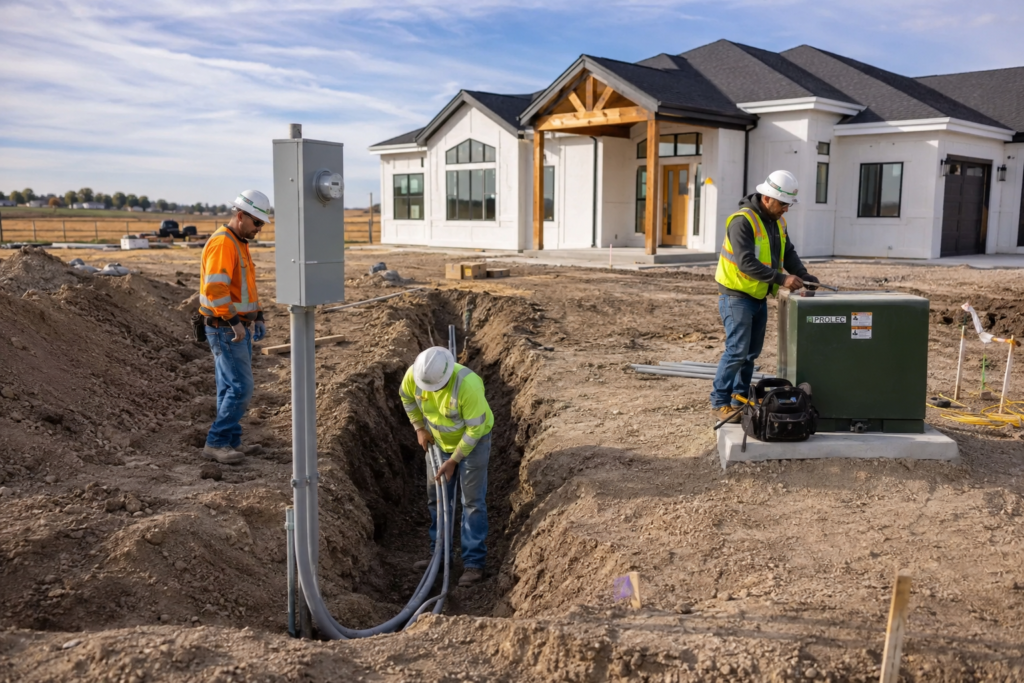
Sometimes crews discover large buried objects along the required power route. Large rocks, hard soil, high water levels, or abandoned underground tanks can increase the cost of trenching. Idaho Power requires power lines to be enclosed inside conduit for protection and future work. Underground service wire also costs more than overhead wire because it has additional protective coating.
The right choice depends on the property, utility requirements, cost, distance, future landscaping, and homeowner preferences.
Transformer Location Matters When Bringing Power to Land in Idaho
Some properties may need a transformer near the home or along the power route. Idaho Power often requires some type of equipment upgrade to provide adequate power to the new home while maintaining quality service for other customers connected to that transformer.
Sometimes the existing transformer can stay the same, but that is not common. If Idaho Power needs to upgrade the transformer, they may also need to upgrade the pole and service wire.
Transformer placement can affect driveway layout, landscaping, access, grading, and the final look of the property. Utility companies also need ongoing access to the transformer for service and maintenance.
When Idaho Power runs a power line across your property, they will have a right of way to access that line. If the transformer sits near trees or landscaping, utility crews may cause damage while maintaining their equipment.
Homeowners should consider transformer location during site planning. A poorly placed transformer can interfere with future landscaping, parking areas, gates, or driveway design.
Temporary Power May Be Needed During Construction
Before permanent power is available, the project may need temporary construction power.
Temporary power allows trades to work on site before the home’s permanent electrical system is complete. The process may require a temporary power pole, meter, utility coordination, inspection, and scheduling.
Before framing commences, the site usually needs temporary power. This helps prevent the need for expensive generator use and gasoline. Once the house is ready for the service wire connection, the temporary pole and meter can be removed.
If temporary power gets delayed, construction can become less efficient. Crews may need generators or other temporary solutions, which can add cost and complexity.
Weather and high demand can also affect the utility company’s ability to start and complete the work. In this situation, Idaho Impact Homes may need to use a generator, which creates additional expenses. If this happens, Idaho Impact Homes uses funds from the contingency budget to pay for it.
Planning temporary power early can help keep the construction schedule moving.
Trenching for Power to Land in Idaho Should Be Coordinated With the Full Site
If the project uses underground power, trenching becomes an important part of site planning.
The power route needs to work with the driveway, well, septic system, water line, drainage, irrigation, and future landscaping. If the site plan is not coordinated, crews may need to retrench, reroute, or work around conflicts later.
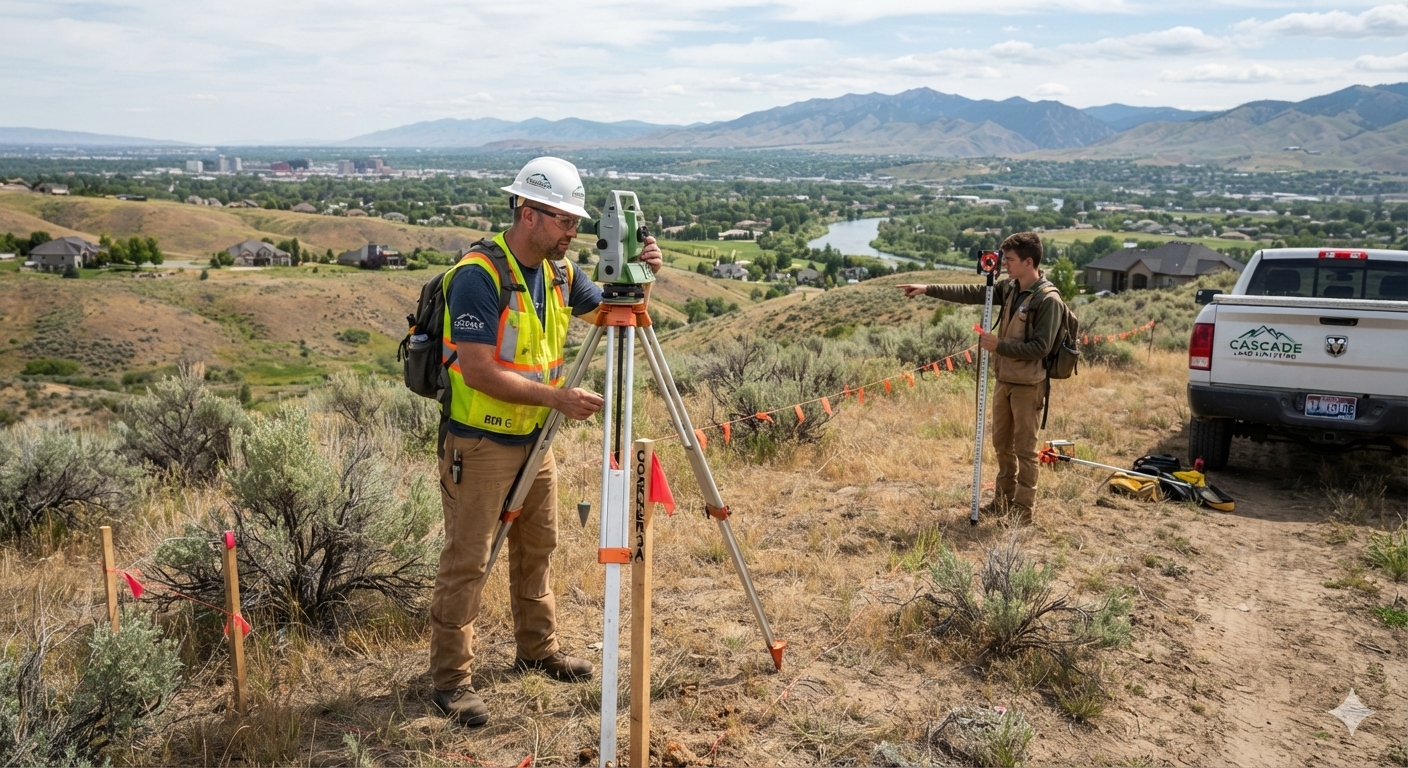
All underground work requires utility locating. In Idaho, Dig Line, also known as 811, marks existing electrical, gas, water, and other underground utilities before excavation begins.
A coordinated trenching plan can reduce unnecessary excavation and help protect future site improvements. Slope can also affect transformer placement. Flat ground usually takes less time to excavate than a slope. Trenching on a hillside can increase the amount of material that crews need to move.
Power to land in Idaho is easier to plan when the electrical route, driveway, home placement, well, and septic system are reviewed together.
Easements Can Affect Power Installation
Some properties need easements before power can reach the homesite.
A power easement may become necessary when electrical service crosses another property, private road, shared access area, or utility corridor. Easements can take time to review, prepare, sign, and record.
This matters for rural parcels, flag lots, shared driveways, and properties that sit far from existing utility infrastructure.
Before buying land or finalizing the homesite, homeowners should ask whether power access requires easements or agreements with neighboring property owners.
Utility Company Timelines Can Affect Power to Land in Idaho
Bringing power to land in Idaho can take longer than homeowners expect.
Utility companies may need time for applications, engineering review, design, scheduling, material availability, easements, inspections, and installation. Idaho Power states that new service extensions and construction requests may take longer than usual because of record growth in its service area and potential supply chain delays.
This does not mean every project will face a delay, but homeowners should discuss power early. Waiting too long to start the utility process can affect temporary power, excavation, framing, inspections, and construction sequencing.
Idaho Power and Residential Service Requirements
Many Treasure Valley properties fall within Idaho Power’s service area, although the serving utility depends on the property location.
Idaho Power provides construction and remodeling resources for temporary and permanent service requests, service extensions, and overhead or underground residential service requirements.
For residential service, Idaho Power provides requirements for new residential service, customer electrical service, and underground residential conduit installation.
Homeowners should confirm which utility serves the property before assuming Idaho Power applies. Some rural properties may involve a different electric provider, cooperative, municipality, or utility district.
Power Planning Can Affect Home Placement
Power is one of several site costs that can affect where a home should sit.
A homesite farther from the road may offer better privacy or views, but it may also require a longer driveway, longer power route, longer water line, more grading, or more site work.
For this reason, homeowners should plan power before finalizing the house location. A strong site plan looks at the entire property, not just the floor plan.
The best custom home location balances views, privacy, access, utilities, drainage, grading, outdoor living, and long-term cost.
Common Mistakes When Bringing Power to Land in Idaho
Homeowners can avoid many power-related issues with early planning.
Common mistakes include:
Assuming nearby power means inexpensive service
Choosing the homesite before reviewing utility distance
Waiting too long to contact the utility company
Forgetting about temporary construction power
Not planning the transformer location
Ignoring easement needs
Planning power separately from the driveway
Creating conflicts with septic, well, or irrigation routes
Underestimating trenching costs
Assuming underground power is always simple
Not confirming which utility serves the property
These decisions can affect the budget and schedule before the home is framed.
How Idaho Impact Homes Helps With Utility Planning
Every Idaho Impact Homes project begins with understanding the property.
Before construction begins, we look at the site as a whole. This includes home placement, driveway access, well placement, septic location, power routes, grading, drainage, outdoor living, and future use of the land.
Power to land in Idaho becomes easier to understand when homeowners develop the utility plan with the full site in mind.
FAQ
What affects the cost of bringing power to land in Idaho?
Distance from existing power, utility provider requirements, overhead versus underground service, trenching, transformer needs, easements, temporary power, and site access can all affect cost.
Is underground power more expensive than overhead power?
It can be. Underground power usually requires trenching, conduit, backfill, and careful coordination with other utilities. Overhead power may work better in some situations, depending on the property and utility requirements.
Do I need temporary power during construction?
Many custom home projects use temporary construction power before permanent electrical service is complete. The exact process depends on the utility provider, site conditions, and construction schedule.
Can power affect where I place my home?
Yes. If the homesite sits far from existing power, the project may need a longer service extension or more trenching. This can affect the site development budget.
Should I check power before buying land?
Yes. If you are buying acreage, power availability should be part of your due diligence. Homeowners should confirm the serving utility, nearby infrastructure, potential easements, and estimated timeline before assuming the property is ready to build.
Can Idaho Impact Homes help evaluate power routes?
Yes. Idaho Impact Homes can help evaluate power routes as part of the larger custom home planning process. Contact Idaho Impact Homes today to get started!