Acreage Drainage in Idaho needs attention before the home looks finished. On a larger property, water can come from rain, snowmelt, irrigation runoff, driveway runoff, open ground, pasture areas, roof drainage, or low spots that naturally collect water.
Homeowners building in Caldwell, Nampa, Middleton, Kuna, Star, Eagle, Boise, or rural areas throughout the Treasure Valley should include drainage in the site plan from the beginning. The building pad, driveway, culverts, swales, berms, foundation backfill, patios, sports courts, and landscaping all affect how water moves across the property.
A custom home on acreage should not only look good when the exterior is finished. The land around it needs to function correctly after move-in.
Why Acreage Drainage in Idaho Needs Early Planning
Acreage Drainage in Idaho works differently than drainage on a smaller city lot.
On acreage, the home may sit farther from the road. The driveway may run longer, the land may include pasture or irrigation features, and the homeowner may eventually add a shop, RV parking, patio, pool, or sport court. Water needs a clear path before construction reaches the finish stage.
A good drainage plan looks at the building pad, driveway slope, culvert locations, swales, berms, foundation backfill, downspout discharge, concrete areas, low spots, and the direction water leaves the property.
Homeowners should not leave these decisions until landscaping. By the time landscapers arrive, the rough grading crew has usually already shaped the major areas of the property.
For homeowners still evaluating whether a parcel is ready to build, it helps to understand the basics of buildable land in Idaho before finalizing the home location, driveway, septic, and drainage approach.
Rough Grade vs. Final Grade on Acreage Lots
Rough grade and final grade are not the same thing.
The rough grade is where the property really starts to take shape. During rough grading, the crew cuts in driveways, install a construction driveway using pit-run as a sub-base, sets culverts, shapes swales, builds berms, plans drainage, and prepares the building pad. Rough graders usually use larger equipment such as bulldozers, backhoes, excavators and loaders.
The rough grading crew may also excavate or cut in the building pad and foundation area. After the foundation is poured, they backfill the foundation excavation and shape the ground so water moves away from the house.
At Idaho Impact Homes, the goal around the house is to move water away from the foundation with intentional slope. A common target is a minimum 5% slope away from the home for the first 10 feet in all directions, then a continued minimum 2% slope for at least the next 10 feet where the site allows. The exact solution depends on the lot, elevations, driveway, patios, drainage paths, and site conditions.
Final grade happens later. It usually takes place after the home exterior is finished, during driveway prep, or when landscapers begin preparing for grass, rock, beds, or other finished surfaces. Final grading often means smoothing the dirt by back-dragging a skid steer bucket across the surface so landscaping sits evenly.
Final grade makes the site look finished. Rough grade does the heavier work of shaping the property.
This distinction matters because homeowners sometimes expect the final landscaping crew to solve every drainage issue at the end. In reality, major drainage decisions need to happen earlier during rough grading, driveway planning, culvert placement, and site shaping.
How Rough Grading Helps Protect the Foundation
After crews pour and backfill the foundation, the grade around the home should direct water away from the house. Water may come from rain, snowmelt, irrigation runoff, driveway runoff, roof drainage, or higher areas of the property.
When the rough grade sends water toward the home, the final landscape has a much harder job. When the rough grade works correctly, landscaping should protect that drainage plan instead of changing it. A drain around basement walls may need a drain to move water around it instead of pooling against it.
Problems often happen after move-in when homeowners start improving the yard. They may add topsoil too high against the siding, build raised planter beds near the foundation, flatten drainage paths, or install curbing in the wrong place. These changes can interrupt the drainage plan created during construction.
A simple rule is worth remembering: water needs a clear path away from the house. Any landscaping, patio, driveway, or hardscape plan should protect that path.
How Driveways Affect Acreage Drainage in Idaho
Driveways can create major drainage problems when they are not shaped correctly.
On acreage, a driveway may be long, sloped, gravel, paved, or designed for heavy vehicle access. When the driveway slopes toward the house, shop, garage, or basement area, water needs a way to collect and redirect before it reaches the structure.
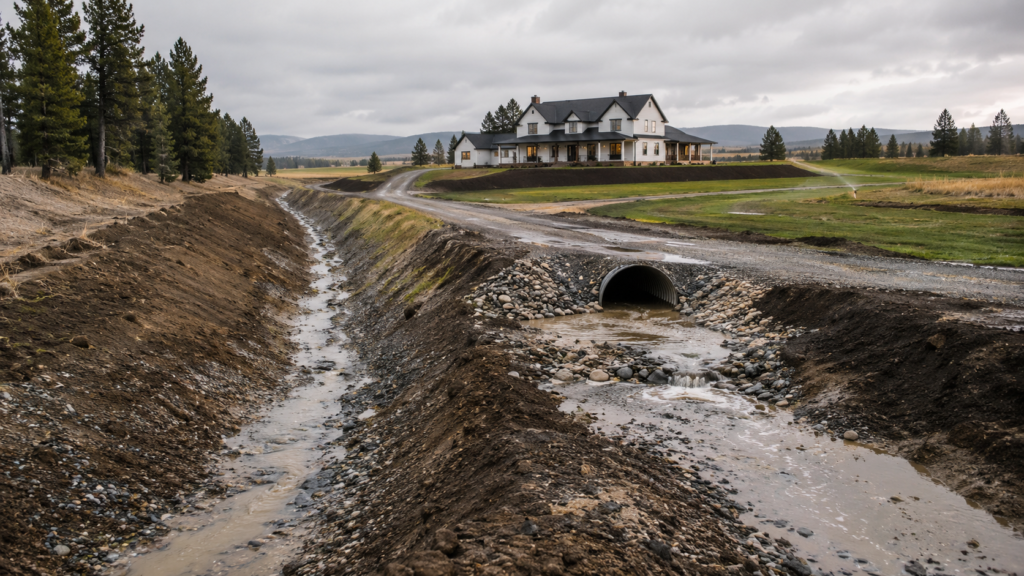
The site may need a culvert under the driveway, a swale along the driveway edge, a catch basin in a low area, a linear drain across the driveway, a French drain where water collects, or a berm that redirects surface water.
A linear drain can catch water across a driveway and send it away from the house. A catch basin may work in a low point where water naturally collects. The right solution depends on the slope, soil, driveway material, water volume, and where the water can safely discharge.
Review driveway drainage before crews finish the driveway. It is much easier to plan drainage during rough grading than to cut into a finished driveway later.
For a deeper look at driveway planning, Idaho Impact Homes has a guide on driveway costs in Idaho and what homeowners should understand before building on land.
Pooling Water and Acreage Drainage in Idaho
Some acreage properties naturally hold water in low areas.
A large wet spot in the middle of the property may signal a drainage problem, but it may also become part of the long-term plan when handled correctly. In some cases, homeowners may consider creating a pond where water already wants to collect.
That decision needs careful review. A pond can affect grading, irrigation, soil movement, safety, maintenance, mosquito control, animal access, and future use of the land. It may also affect how water enters and leaves the property.
Homeowners should not automatically fill a low area without understanding where that water will go next. Filling one area can push water toward the home, driveway, neighbor, septic area, future shop, or sport court. Sometimes the better solution redirects water. Other times, the property may need a culvert, swale, French drain, berm, or intentional pond design.
The right answer depends on the property. Homeowners should address large areas of pooling water as part of the acreage plan instead of waiting until landscaping begins.
Sports Courts, Patios, and Hardscape Need Drainage Planning
Sports courts and hardscape areas need drainage planning before concrete goes in.
A pickleball court, basketball court, patio, pool deck, or large concrete area can change how water moves across the property. These surfaces do not absorb water the same way open ground does. Placed in the wrong area, they can send runoff toward the house, driveway, shop, or low areas that already have drainage concerns.
A sport court may need flat usable space, proper surface slope, drainage around the edges, setbacks from property lines, room for fencing or lighting, and a clean path for runoff. Homeowners should not drop these features onto the site after everything else is finished.
When the property already has a low spot, drainage path, or swale, a hardscape feature should not block it. The goal is to place outdoor living areas where they improve the property without creating water problems.
Landscaping Mistakes That Can Create Drainage Problems
Drainage problems do not always come from construction. Sometimes they happen because the property changes after the builder leaves.
Common post-build drainage mistakes include adding too much topsoil near the foundation, raising soil above proper siding or concrete clearance, building raised beds that hold water against the home, covering drainage swales, running downspouts into wet areas, creating gravel paths that act like small dams, installing curbing without considering water flow, overwatering near the foundation, and placing courts or patios over drainage paths.
On Treasure Valley acreage, these issues can become more noticeable during spring runoff, winter freeze-thaw cycles, irrigation season, or heavy rain. A small grading mistake near the house can turn into standing water if the surrounding land sends water back toward the foundation.
Before adding landscape beds, patios, gravel, curbing, sports courts, or retaining features, homeowners should look at how water currently moves across the site. When the rough grade and drainage plan are working, do not interrupt them without a plan.
For homeowners comparing acreage lots before construction, site costs in Idaho can also help explain why grading, drainage, driveway work, and utilities matter before the home is built.
Drainage Tools for Acreage Drainage in Idaho
Swales, culverts, berms, and French drains are common drainage tools, but they do different jobs.
A swale is a shallow drainage path that helps move water across the land. It may look like a gentle ditch, but it has a purpose. A culvert allows water to pass under a driveway or road. A berm can redirect water away from an area that needs protection. A French drain can collect and move water underground when surface drainage alone does not solve the problem.
The right tool depends on the problem.
A culvert helps when water crosses a driveway. A swale or berm can redirect surface water before it reaches the foundation. Low areas may need a catch basin, French drain, pond, or regrading plan. Driveways that send water toward a garage may need a linear drain to collect runoff and move it away from the house.
Homeowners should be careful about changing these features after move-in. Filling a swale can send water toward the house. Ignoring a culvert can cause driveway washouts or standing water. Cutting through a berm can remove the barrier that was redirecting water.
The drainage system may not always look dramatic, but it is doing important work.
For general information about how runoff is managed during construction, homeowners can review Idaho DEQ’s overview of stormwater in Idaho. This is especially helpful for understanding why disturbed soil, grading, runoff, and site stabilization matter during a build.
How Idaho Impact Homes Helps Homeowners Plan Acreage Drainage in Idaho
At Idaho Impact Homes, we know that acreage planning does not stop at the walls of the home.
A custom home on land should be planned with the building pad, driveway, rough grade, drainage, culverts, swales, foundation backfill, future hardscape, and outdoor living in mind. These decisions affect how the property functions long after construction is complete.
Our process helps homeowners think through the practical side of acreage living before small decisions become expensive problems. That includes where the home sits, how water moves, where future patios or sports courts may go, and how the land can support the homeowner’s long-term plans.
Acreage Drainage in Idaho works best when the home and land are planned together.
FAQ
What is the difference between rough grade and final grade?
Rough grade shapes the property with heavier equipment. It includes building pads, driveway cuts, culverts, swales, berms, foundation excavation, backfill, and major drainage planning. Final grade usually smooths the surface for landscaping, driveway base prep, grass, rock, and finished outdoor areas.
Why does driveway drainage matter on acreage?
A long or sloped driveway can send water toward the house, garage, shop, or low areas of the property. Driveway drainage may require culverts, swales, grading, catch basins, French drains, or linear drains to move water away from important structures.
Can landscaping cause drainage problems after a custom home is built?
Yes. Landscaping can create drainage problems if homeowners add soil too high against the house, block swales, trap water with curbing, overwater near the foundation, or change the slope around the home.
What if a large part of my acreage holds water?
A large pooling area should be reviewed before major landscaping begins. The solution may involve swales, culverts, French drains, berms, regrading, or in some cases, intentionally designing a pond where water already wants to collect.
Should I plan a sports court before rough grading?
Yes. If you want a pickleball court, basketball court, patio, or other hardscape later, it helps to plan the location before rough grading is complete. Courts need flat space, proper drainage, and a clear runoff path.
Planning a Custom Home on Idaho Acreage?
If you are building on acreage in Caldwell, Nampa, Middleton, Kuna, Star, Eagle, Boise, or the surrounding Treasure Valley, Idaho Impact Homes can help you think beyond the house.
We help homeowners plan custom homes that fit the land, protect drainage paths, support future improvements, and function well after move-in.
Contact Idaho Impact Homes to start planning a custom home that works with your acreage from day one.