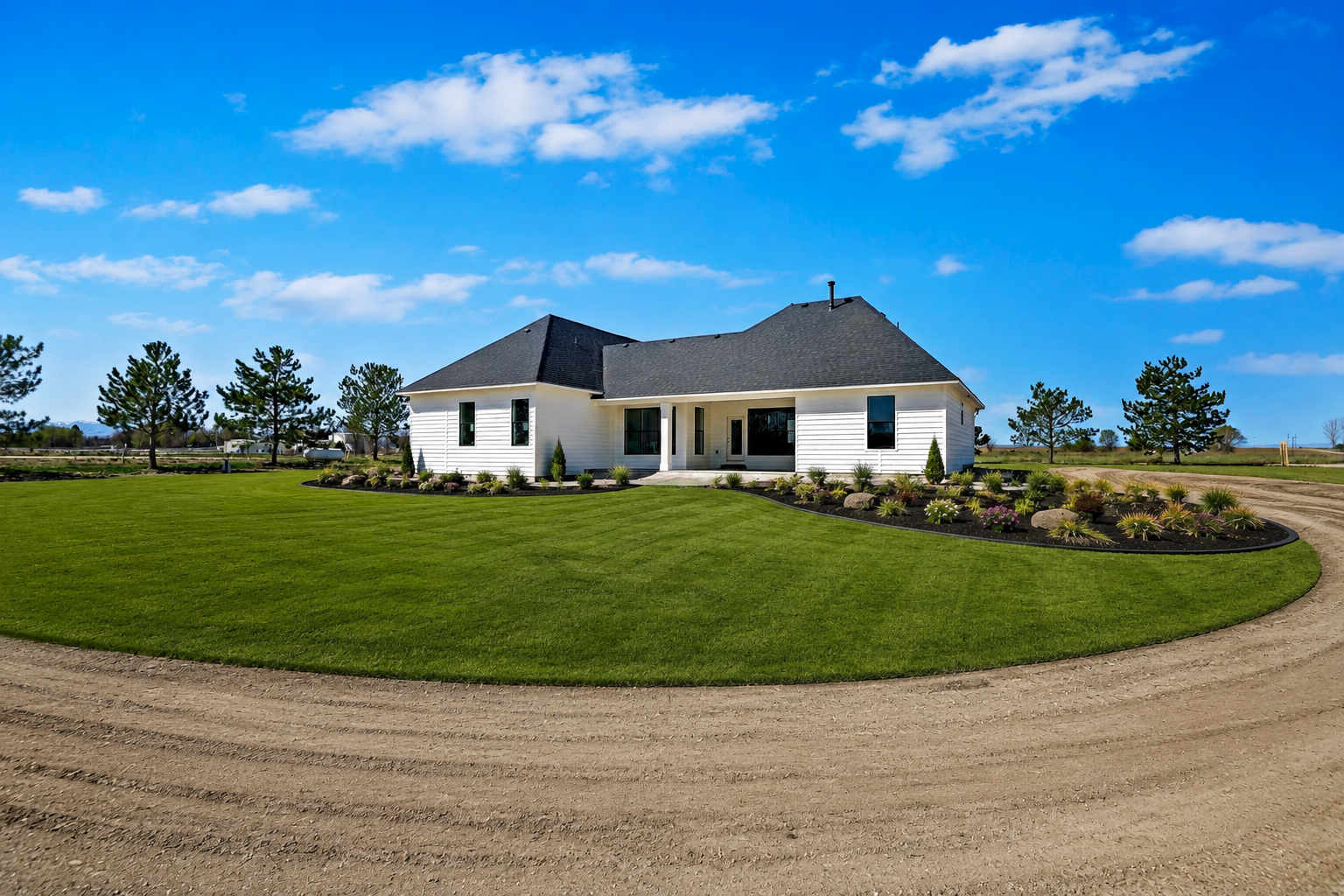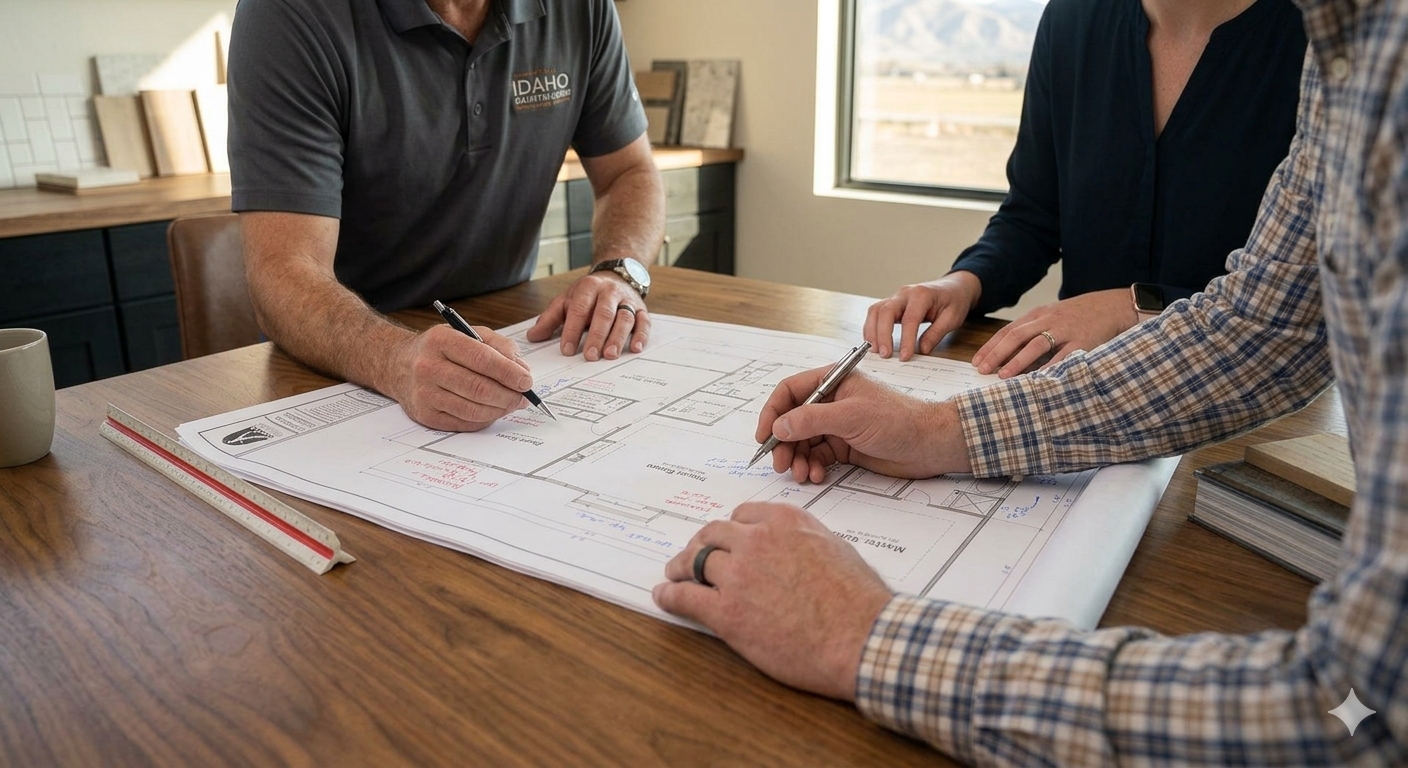
A custom home preconstruction checklist helps turn a custom-home idea into a project that is ready for construction. Although breaking ground feels like the beginning, successful construction depends on work completed long before excavation.

In addition, land questions, surveys, site planning, utilities, plans, engineering, specifications, budgets, financing, permits, and homeowner decisions all need to reach the appropriate level of readiness.
However, starting construction before those pieces are aligned can turn unanswered questions into delays, redesign, change orders, or unexpected costs.
Therefore, this checklist helps prospective Idaho homeowners understand the major categories that should be addressed before construction begins. However, the exact requirements vary by project.
1. Start the Custom Home Preconstruction Checklist With Buildability
For example, a parcel can be legally recognized and still present obstacles for a particular plan.
First, investigate the conditions relevant to the project, which may include:
- Zoning and permitted use
- Setbacks
- Building area
- Topography
- Drainage
- Soils or geotechnical questions
- Flood-related information, including the FEMA Flood Map Service Center
- Well and septic feasibility
- Utility availability
- Road or driveway access
The required investigations depend on the property and jurisdiction. Therefore, confirm them before treating a conceptual plan as construction-ready. Our guide to buildable land in Idaho explains several property conditions worth reviewing early.
2. Confirm Ownership, Boundaries, and Access
Next, the project team needs reliable property information.
Then, review or obtain the appropriate documentation for:
- Ownership and legal description
- Property boundaries
- Recorded access
- Easements
- Rights-of-way
- Existing encroachments
- Subdivision or association restrictions, if applicable
In other words, a visual assumption about a fence line or driveway is not a substitute for the documentation or professional work required for the project.
3. Finalize the Homesite and Driveway Concept
Likewise, the house location affects nearly every site-development decision.
Next, before construction, the plan should appropriately address:
- House orientation
- Finished floor elevations
- Driveway approach and turnaround
- Grading and drainage
- Outdoor living
- Well, septic, and utility locations
- Construction access
- Space for future shops or other improvements
As a result, changing the homesite late can affect engineering, permits, utilities, estimates, and schedules.
4. Coordinate Utilities and On-Site Systems
Next, identify how the property will receive power, water, wastewater service, communications, and any other required utilities.
For rural properties, this may involve a well, septic system, long power extension, propane, or other site-specific work. In addition, confirm responsibilities, preliminary routes, required design work, provider lead times, and budget assumptions.
In addition, for a private well, review Idaho’s well construction and drilling information with your licensed well driller.
However, do not assume that a utility visible near the property is available at the needed location or capacity. Verify service with the appropriate provider, and review the planning considerations for septic systems in Idaho when public sewer is unavailable.
5. Complete the Plans in Your Custom Home Preconstruction Checklist
Similarly, the plans should describe the home clearly enough for engineering, estimating, permitting, trade coordination, and construction.
For example, depending on the project, the plan set may include:
- Site plan
- Floor plans
- Exterior elevations
- Foundation information
- Structural details
- Roof plan
- Sections
- Window and door information
- Electrical or lighting information
- Other project-specific drawings
As a result, the designer, engineer, builder, and jurisdiction may require different information. Establish responsibilities early.
6. Finish Required Engineering and Technical Design
In addition, engineering should reflect the actual home and actual site conditions.
For example, structural, civil, geotechnical, septic, energy, truss, mechanical, or other professional work may be required depending on the project. For that reason, changes after engineering can create revisions and additional coordination.
Therefore, before construction, confirm that the current plans incorporate the approved technical information.
7. Align Specifications and Selections With the Estimate
However, plans show form and layout, while specifications define much of what will be built.
Specifically, clarify major items such as:
- Exterior materials
- Roofing
- Windows and exterior doors
- Insulation approach
- Heating and cooling systems
- Cabinets and countertops
- Flooring and tile
- Plumbing and lighting fixtures
- Appliances
- Interior doors and trim
- Garage and shop features
Although selections do not all need to arrive on site before excavation, they should be made early enough to support accurate pricing, ordering, design coordination, and the construction schedule.
Project-specific contracts and approved documents control how selections, allowances, and pricing are handled. Therefore, confirm which choices are complete and which costs remain open.
8. Review the Budget in Your Custom Home Preconstruction Checklist
Next, the budget should look beyond the visible house.
Review the expected treatment of:
- Design and engineering
- Permits and fees
- Site preparation
- Excavation and foundation work
- Driveway
- Utilities
- Well and septic, if applicable
- Home construction
- Shops or accessory structures
- Owner-provided items
- Landscaping or fencing
- Financing-related expenses
- Contingency
In addition, identify exclusions, assumptions, undecided items, and costs that will be handled outside the builder’s agreement.
9. Finalize Construction Financing
Similarly, if the project uses financing, the lender may need final plans, specifications, builder information, the construction agreement, appraisal, insurance, title work, and other documentation. Our overview of construction loans in Idaho provides additional context for that coordination.
Specifically, confirm:
- Approval conditions
- Closing requirements
- Draw procedures
- Inspection requirements
- Builder documentation
- Change-order treatment
- Contingency requirements
- Borrower responsibilities
Because loan requirements vary, obtain the exact process from the lender.
10. Confirm Permits in Your Custom Home Preconstruction Checklist
Therefore, construction should not begin based only on an assumption that permits are ready.
Next, confirm the status of building, septic, driveway, utility, access, or other approvals required for the specific property. Also, verify whether any permit conditions must be addressed before excavation or inspection.
For example, the Idaho Department of Environmental Quality explains that local public health districts handle property-specific septic evaluations and permits. However, permit requirements and timelines vary by jurisdiction and project complexity.
11. Confirm Insurance and Risk Responsibilities
Meanwhile, the contract, lender, builder, and insurer may each have documentation requirements.
Confirm which policies are required, who provides them, when coverage begins, and what the homeowner must maintain. For this reason, direct questions to qualified insurance professionals and the applicable parties.
12. Establish the Decision and Communication Process
In addition, construction creates frequent coordination among the homeowner, builder, trades, suppliers, designer, lender, inspectors, and jurisdiction.
Next, before starting, decide:
- Who can approve changes?
- How will decisions be documented?
- How quickly must selection questions be answered?
- Who is the primary homeowner contact?
- How will progress updates occur?
- What is the process for site visits?
As a result, clear expectations reduce confusion once work is moving quickly.
13. Review Contingency and Remaining Unknowns
Still, careful planning cannot remove every variable.
Therefore, identify unresolved risks such as soils, excavation, utility work, material availability, owner changes, or incomplete selections. Discuss how those risks are addressed in the budget, contract, financing, and decision process.
In other words, financial breathing room is different from assuming every unknown will resolve favorably.
14. Finish the Custom Home Preconstruction Checklist With a Readiness Meeting
Finally, before excavation, bring the major pieces together.
Confirm that everyone is working from the current plans and specifications. Then, review the homesite, access, schedule assumptions, selections, utilities, permits, financing status, communication process, and known open items.
Ultimately, the objective is not to claim that nothing can change. Instead, it is to make sure the project is intentionally ready to begin.
Custom Home Preconstruction Checklist Summary
Finally, before breaking ground, you should be able to answer:
- Where will the home and driveway go?
- Which property constraints have been verified?
- Are plans and required engineering complete?
- Do the specifications match the estimate?
- Are the full site and home budgets understood?
- Is financing ready for the next step?
- Are required permits and approvals in place?
- Are insurance responsibilities understood?
- Is the decision-making process clear?
- Which risks remain, and how will they be handled?
Preparing to Build a Custom Home in Idaho?
In short, a custom home preconstruction checklist helps move the project from imaginable to buildable.
Idaho Impact Homes focuses on transparent planning, design coordination, and construction. As a result, we can help prospective homeowners organize the construction-side questions that should be answered before excavation begins.
Contact Idaho Impact Homes to discuss your property, plans, project readiness, and next steps.
Finally, this checklist is general information, not legal, financial, engineering, insurance, or permitting advice. However, project requirements vary by property, contract, lender, jurisdiction, and professional recommendations.