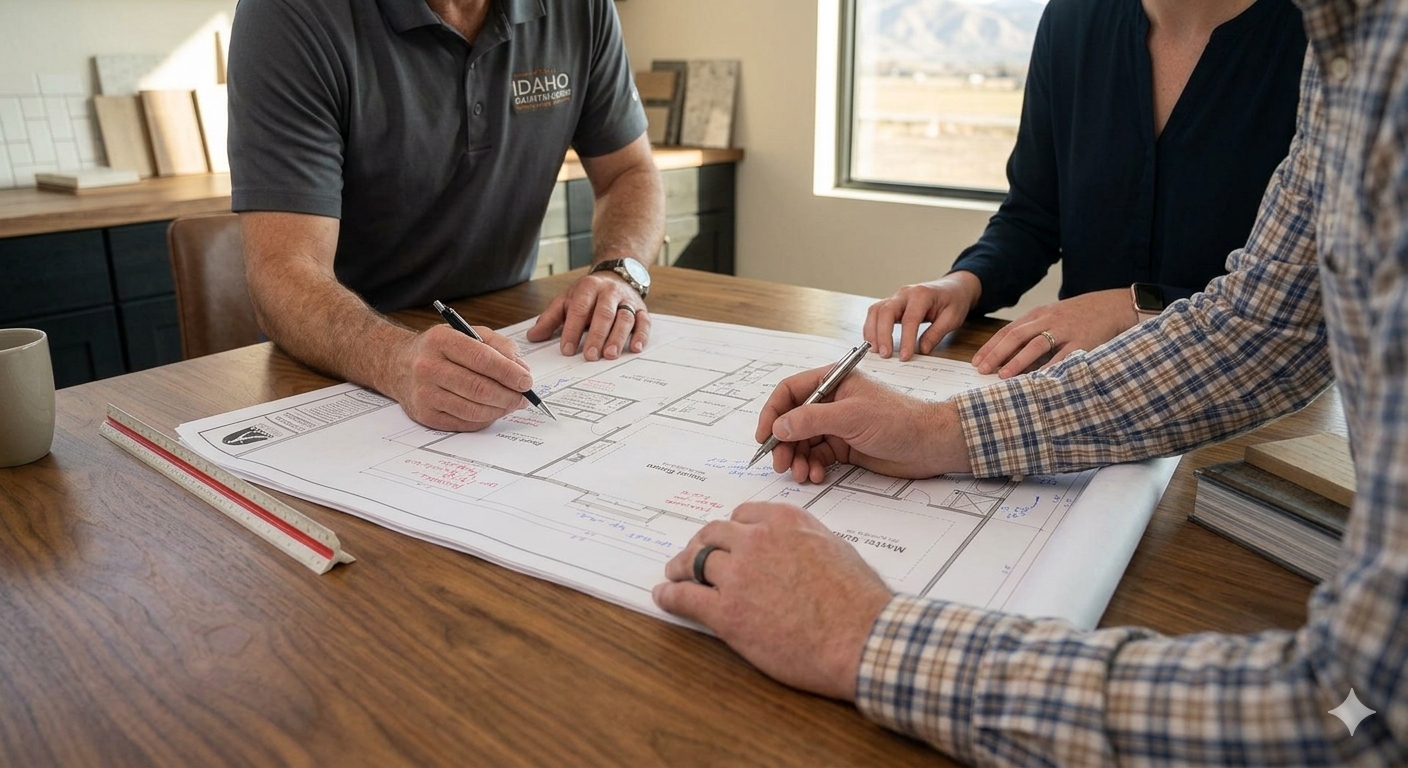
Building a custom home is different from buying an existing house, and financing one is different too.
With an existing home, a lender can evaluate a finished property and issue a mortgage based on the purchase price, appraisal, borrower qualifications, and other lending requirements. With a custom home, the house may exist only as a floor plan when financing begins.
The land, house plans, site improvements, construction budget, builder, appraisal, and loan all have to come together before construction can move forward.
If you’re considering building a custom home in Idaho, understanding that process early can help you make better decisions about your land, home design, budget, and builder.

What Is a Construction Loan?
A construction loan is financing used to pay for the construction of a home.
Unlike a traditional mortgage, where most or all of the loan proceeds are provided at closing, construction funds are generally released in stages as work is completed.
These payments are commonly called draws.
A simplified construction might look something like this:
- Land and preconstruction requirements are addressed.
- Financing is approved and the construction loan closes.
- Construction begins.
- The builder completes portions of the work.
- Draw requests are submitted according to the lender’s process.
- The lender verifies progress as required.
- Funds are released for completed work.
- The process continues through construction.
- Once the home is completed and the lender’s requirements are satisfied, the construction financing is paid off or converted into longer-term mortgage financing, depending on the loan program.
Exact procedures vary by lender and loan product, so prospective homeowners should discuss the details directly with their lender.
Construction Loan vs. Traditional Mortgage
The biggest difference is simple:
With a traditional mortgage, the house already exists.
With a construction loan, the lender is financing a project that still needs to be built.
That creates additional variables.
The lender may need information about the:
- Property
- House plans
- Builder
- Construction specifications
- Project budget
- Estimated value of the completed home
- Construction schedule
- Borrower’s financial qualifications
This is one reason financing should be part of the planning process early rather than something addressed after every design decision has already been made.
Talk With a Construction Lender Early
You don’t necessarily need a completely finished home design before having your first conversation with a lender.
In fact, talking with a lender early can be valuable.
A preliminary conversation can help establish the financial boundaries for the project before you spend significant time designing a home that doesn’t fit them.
For example, imagine designing the perfect $900,000 project and only afterward discovering that the financing structure you’re comfortable with supports a substantially smaller budget.
That’s a painful problem to solve after months of planning.
Understanding your approximate financing range earlier allows the home, land, and site-development decisions to be evaluated together.
Land Can Be a Major Part of the Financing Equation
If you already own the property where you plan to build, tell your lender.
Depending on the loan structure and lender requirements, equity in the land may play a role in financing the project.
If you haven’t purchased land yet, financing becomes another reason to evaluate property carefully before buying it.
The price of the land is only one component of what it may cost to build there.
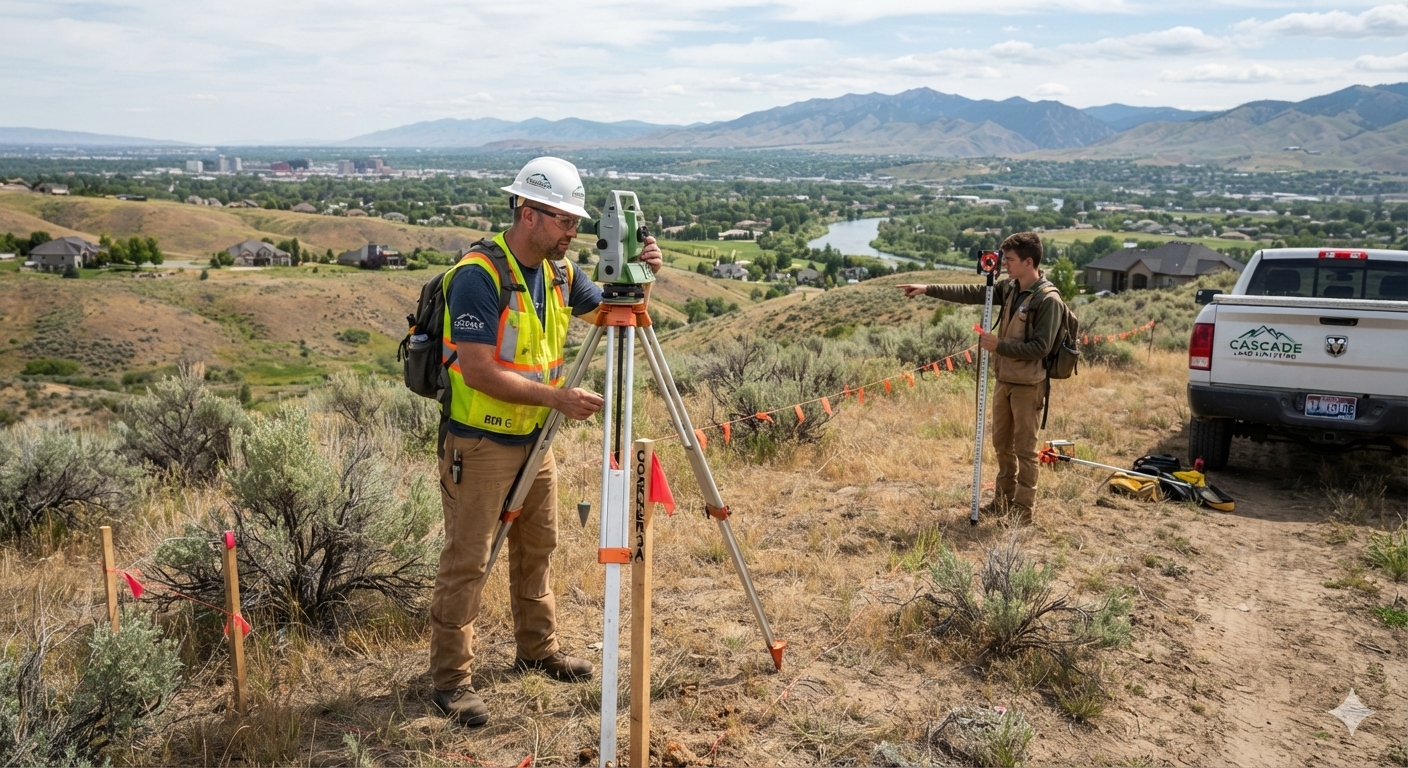
A beautiful five-acre parcel may still require significant investment for items such as:
- Excavation and grading
- Driveway construction
- Well
- Septic system
- Power
- Drainage
- Engineering
- Surveying
- Permitting
- Utility extensions
- Site preparation
Two properties with similar purchase prices can therefore result in very different total project costs.
Before buying acreage, try to understand both what the land costs and what the land may cost to build on.
Your Floor Plan and Your Property Need to Work Together
A common mistake in custom-home planning is treating the house and property as two separate decisions.
They aren’t.
Your property can influence the appropriate foundation, driveway, utilities, drainage, orientation, excavation requirements, and even the layout of the house.
Likewise, the home you choose can dramatically affect the total construction budget.
A floor plan that works beautifully on one property may require expensive modifications on another.
For buyers using construction financing, those costs ultimately become part of the larger financial picture.
That’s why we generally encourage clients to think about three things together:
Land + Home + Site Development
Rather than asking only, “How much house can I afford?” a better question may be:
What complete project can I comfortably build?
What Will a Lender Need From the Builder?
Requirements vary between lenders, but construction financing commonly requires considerably more project information than financing an existing home.
Depending on the lender and stage of the project, that may include items related to the builder, plans, specifications, construction agreement, budget, insurance, project schedule, and other documentation.
This is something homeowners should discuss directly with their lender because every financing program can be different.
The important takeaway is that builder selection and financing eventually intersect.
Your lender isn’t financing a theoretical house. They’re financing an actual construction project.
The Construction Budget Matters
The quality of the construction budget becomes especially important when financing a custom home.
A budget needs to account for more than the visible finishes inside the house.
Depending on the property and project, significant costs can occur before the home begins taking shape above ground.
Those costs can include:
- Site preparation
- Excavation
- Foundation requirements
- Utility installation
- Well and septic
- Driveways
- Engineering
- Permits
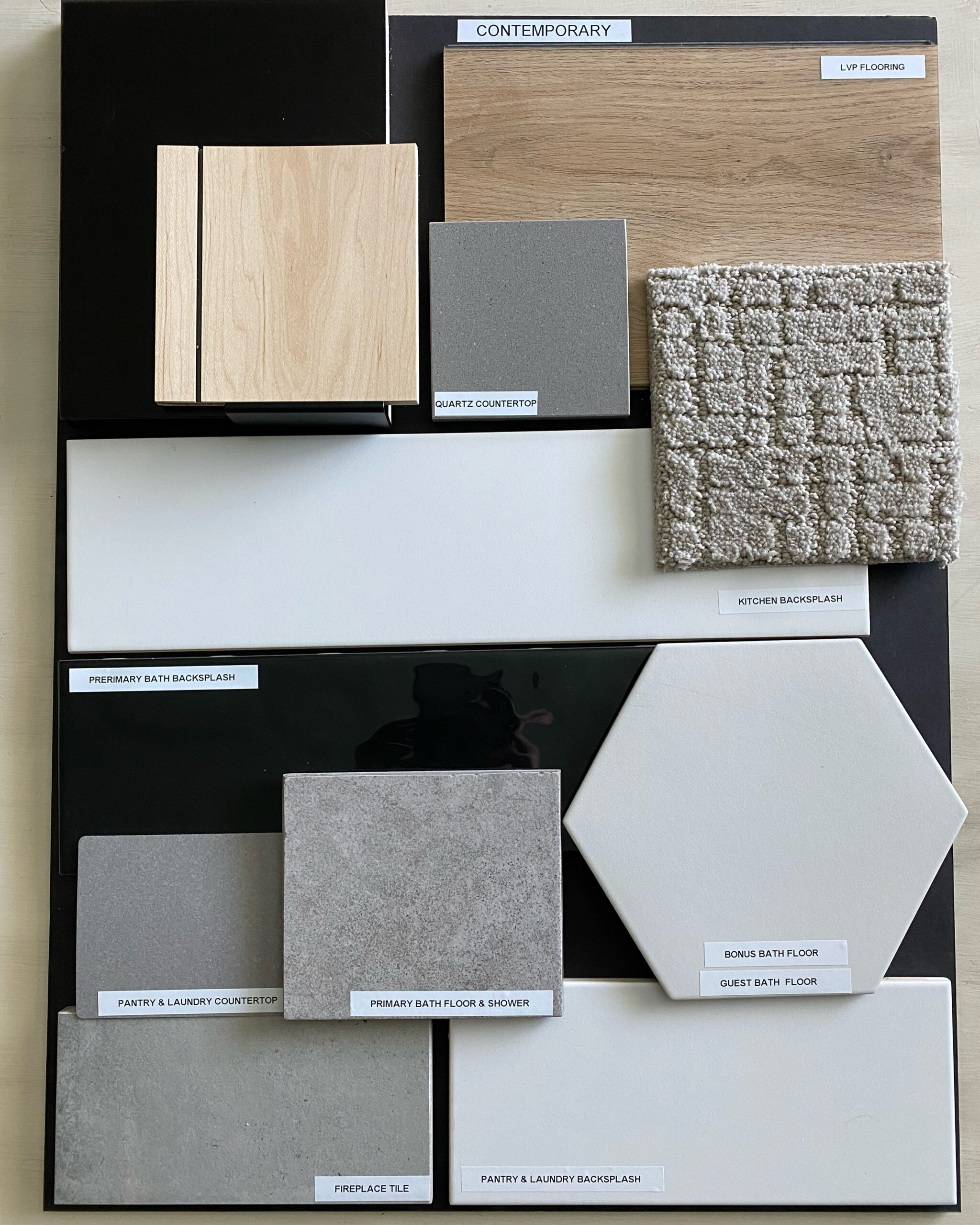
- Material selections
- Labor
- Exterior improvements
- Other property-specific work
A project that looks affordable when considering only the house can become substantially different after site-development costs are included.
This is especially important when building on acreage.
Understand What Is Included in an Estimate
When comparing builders, don’t look only at the number at the bottom of an estimate.
Look at what produced that number.
Ask questions such as:
- What specifications are included?
- What site costs are included?
- What hasn’t been determined yet?
- What assumptions were made?
- Are important items missing?
- How are selections handled?
- How are changes handled?
- What could reasonably cause the price to change?
Two builders can appear to be pricing the same home while actually pricing two very different scopes of work.
The lowest initial estimate doesn’t necessarily produce the lowest final project cost.
A detailed estimate can also make conversations with your lender more productive because you have a clearer understanding of where the project’s money is expected to go.
How Construction Draws Work
Construction lenders generally don’t release the entire construction budget to the builder on the first day.
Instead, money is released throughout construction according to the lender’s draw process.
As portions of the home are completed, the builder typically requests funds for completed work. The lender may require documentation, inspections, or other verification before releasing those funds.
The exact process varies by lender.
For homeowners, the important thing to understand is that construction financing continues to operate throughout the build.
The builder, homeowner, and lender each have responsibilities during that process.
Before construction begins, ask your lender how draws work, how long they typically take, what documentation is required, and what you as the borrower are expected to do.
Changes During Construction Can Affect More Than the House
Custom homes involve decisions.
Some changes are relatively small. Others can substantially change the cost of the project.
If you decide during construction that you want a larger patio, different cabinetry, upgraded appliances, additional site work, or a significant design modification, someone still has to pay for that change.
Depending on your construction loan and lender requirements, additional costs may not automatically become part of your financing.
Before construction begins, understand both your builder’s change-order process and your lender’s rules regarding changes that increase the project cost.
This is another reason to make as many major decisions as reasonably possible during design and preconstruction.
Don’t Forget Contingency
Even a carefully planned custom home contains variables.
Acreage can add additional uncertainty because some site conditions aren’t completely understood until investigation or construction occurs.
Examples might include unexpected soil conditions, additional excavation, utility complications, material changes, or owner-requested modifications.
Ask your lender and builder how contingency should be handled for your specific project.
Having financial breathing room is very different from beginning construction with a budget that already depends on everything going perfectly.
Questions to Ask a Construction Lender
Before choosing your financing, consider asking:
- Do you regularly finance custom-home construction?
- Do you offer one-time-close or construction-to-permanent loans?
- How does my land equity factor into the loan?
- What documentation do you need from my builder?
- When do you require final plans and specifications?
- How is the completed home appraised?
- How are construction draws handled?
- How long does a typical draw take?
- What inspections are required?
- How are change orders handled?
- What happens if construction costs increase?
- Are contingency funds required?
- When do payments begin?
- How is interest calculated during construction?
- What happens when construction is complete?
- Are there builder-approval requirements?
Don’t be afraid to interview more than one lender.
Interest rates matter, but the lender’s experience with construction financing and the way the loan is structured can also matter significantly during a custom build.
Builder and Lender Coordination Matters
A construction loan creates another relationship within the custom-home process.
You aren’t working only with your builder.
Your project may involve:
Homeowner → Builder → Designer → Engineer → Lender → Appraiser → Inspectors → Jurisdiction → Subcontractors → Suppliers
Good planning helps those pieces work together.
Problems often become more expensive when important decisions are made independently and reconciled later.
For example, purchasing land before understanding site-development costs, completing a home design before establishing a realistic project budget, or selecting finishes before understanding financing limitations can create unnecessary redesign and disappointment.
The earlier the major pieces are considered together, the better.
A Better Order for Planning a Custom Home
There isn’t one perfect sequence for every project, but a prospective homeowner can often benefit from approaching the process roughly like this:
1. Establish your overall financial comfort zone.
Talk with an experienced construction lender and determine what level of investment makes sense for you.
2. Evaluate the property.
If you already own land, begin understanding its building characteristics and likely site-development requirements.
If you’re shopping for land, evaluate buildability before assuming a property will work for your project.
3. Establish the home’s requirements.
Determine approximate size, bedrooms, bathrooms, garage needs, lifestyle priorities, architectural direction, and other major requirements.
4. Develop the design and specifications.
Turn the concept into something that can actually be evaluated and estimated.
5. Refine the construction budget.
Combine the house, specifications, site development, and other project costs into a more complete financial picture.
6. Finalize financing.
Provide your lender with the documentation required for the specific construction loan.
7. Build.
Once the project, financing, contracts, permits, and other requirements are ready, construction can begin.
The details will vary from project to project, but the principle remains the same:
Financial planning, land planning, design, and construction planning should support each other.
Building on Acreage in Idaho Adds Another Layer
Acreage is one of the reasons many people choose to build a custom home in Idaho.
It offers opportunities that are difficult to reproduce on a typical subdivision lot: privacy, views, shops, animals, larger outdoor spaces, and the ability to orient a home around the property.
But acreage also makes early planning more important.
The location of the home, driveway, utilities, well, septic system, drainage, slopes, setbacks, easements, and other site conditions can all affect the project.
A homeowner who understands those issues before finalizing the house is in a much stronger position than someone who discovers them after plans are complete.
Planning to Build a Custom Home in Idaho?
If you’re considering building a custom home—especially on acreage—start by understanding the entire project rather than looking at the house in isolation.
Your land, site development, home design, specifications, construction budget, and financing ultimately need to work together.
Idaho Impact Homes focuses on custom-home construction with an emphasis on transparent planning, design coordination, and construction.
If you already own land or are considering purchasing property for a custom home, we can help you begin evaluating the construction side of the project and identify questions that should be answered before you move too far into design.
Contact Idaho Impact Homes to start a conversation about your property and custom-home plans.
This article provides general information about the custom-home construction process and is not financial or lending advice. Loan programs, underwriting requirements, rates, terms, appraisal requirements, and construction-loan procedures vary by lender and borrower. Consult a qualified lender regarding your specific financing situation.