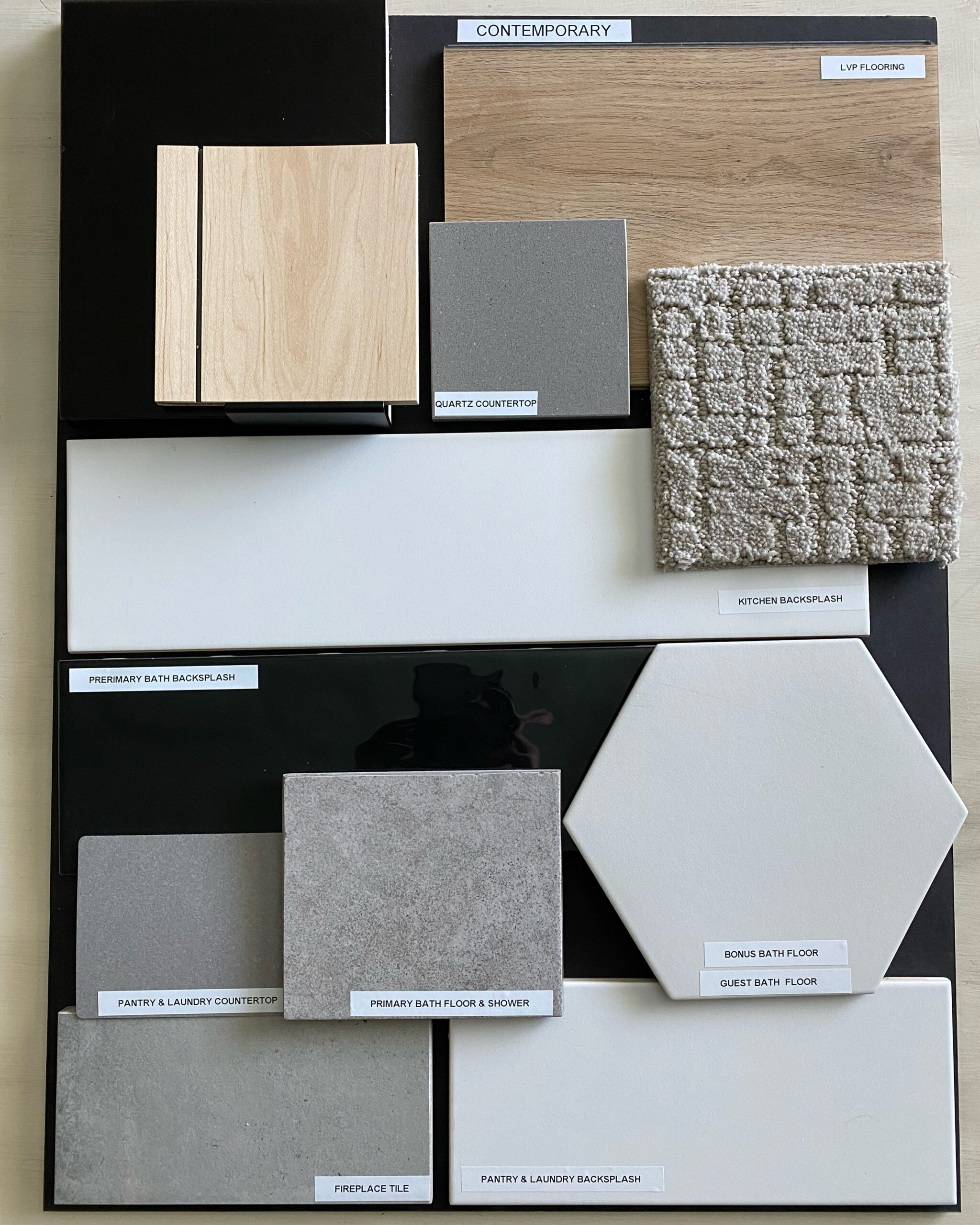
Floor Plans for Acreage Homes should respond to more than square footage, bedroom count, and interior layout. When building on acreage in Idaho, the land itself should shape the way the home is designed.
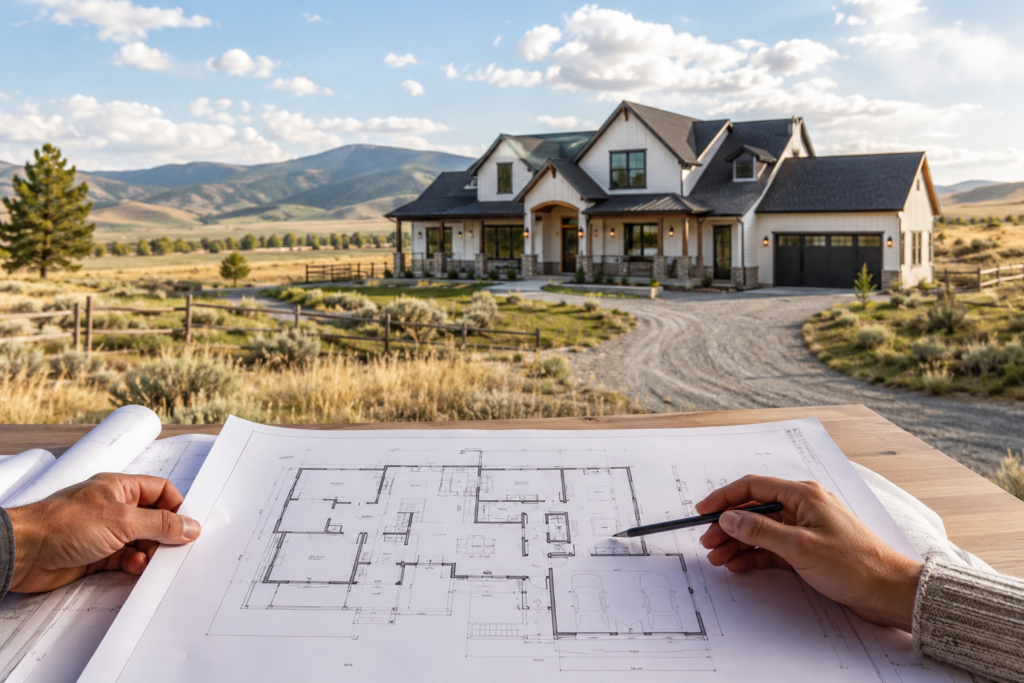
Floor Plans for Acreage Homes need to respond to more than square footage, bedroom count, and interior layout. When building on acreage in Idaho, the land itself should shape the way the home is designed.
Floor plans for acreage homes should begin with the property, not just the house.
On a standard subdivision lot, the lot often determines the driveway, utilities, setbacks, and orientation before design begins.
Acreage is different.
When you build on your own land, you have more flexibility. That flexibility creates more decisions. Where should the home sit? Which direction should it face? Where should the driveway enter? Where will the well, septic system, and power routes go?
A stock floor plan cannot answer those questions on its own.
Before finalizing the design, homeowners and builders should review the entire property as a whole. The best floor plan works with the land instead of forcing the land to work around the plan. Sometimes an existing plan still works, but Idaho Impact Homes usually needs to modify it first.
Stock Floor Plans May Not Match the Driveway Approach
Driveway access can change the way a home should be designed.
A stock floor plan may assume the garage faces the street. That works for many neighborhood lots, but it may not work well on acreage. Your driveway may approach the home from the side, rear, uphill, downhill, or at an angle.
At Idaho Impact Homes, we often design custom homes with side-entry garages because they create better curb appeal. A large blank garage wall at the front of the home rarely creates the best first impression.
When a garage must face the street, such as with an RV garage, we often place it farther back than the front of the house. That helps reduce the visual focus on a large blank surface and keeps attention on the front entry, architectural details, and landscaping.
If the garage faces the wrong direction, the home can feel awkward on the property. It can also create unnecessary driveway length, grading, retaining, or utility costs.
Garage Placement Can Affect Energy Use and Curb Appeal
Whenever possible, Idaho Impact Homes prefers to place the garage on the south or west side of the home.
Garages often do not have the same heating and cooling as the main living space, so their temperatures can fluctuate more. When the garage helps absorb more direct sun, it can reduce heat exposure on the conditioned portions of the home.
Floor plans for acreage homes should also consider how people arrive at the property. The driveway, garage, front entry, parking area, and delivery access should all feel intentional.
Guests should feel comfortable parking at your home. They should be able to park, enter, and exit their vehicle without feeling crowded. They should also be able to leave without asking someone else to move a car first. That often means the home needs a turnaround area or looping driveway.
A good floor plan should support the natural arrival experience.
Views Should Shape the Floor Plan
Many people buy acreage because of the view.
That view may include mountains, farmland, open sky, water, trees, sunsets, or a private outdoor setting. A stock floor plan may not place the most important rooms toward the best views.
Idaho Impact Homes designs living rooms, kitchens, dining areas, offices, primary suites, covered patios, and outdoor gathering areas around the strongest features of the property.
If the best view is behind the house, the layout should respond to that. If the best view is to the side, the home may need a different window plan, room layout, or patio placement.
Ideally, backyard living spaces face east so the house can provide shade during the hottest part of the day. That does not always work. Sometimes the best outdoor living space needs to shift to the side of the home in order to preserve the view.
When that happens, the floor plan usually needs customization so the common areas include more windows and better connections to the outdoor space.
Floor plans for acreage homes should help homeowners enjoy the land every day. If you have beautiful property but cannot use it the way you hoped, the home can leave you feeling disappointed.
Why Floor Plans for Acreage Homes Should Consider Sunlight and Orientation
The direction a home faces can affect comfort, energy efficiency, outdoor living, and natural light.
A stock plan may look beautiful on paper but perform poorly if it faces the wrong direction. Large west-facing windows can create too much afternoon heat. A covered patio may sit in harsh sun when the homeowner expected shade. A driveway may stay icy longer if it remains in shade.
Home orientation should shape the floor plan before construction begins.
For acreage homes, the design should consider morning light, afternoon sun, prevailing wind, winter snow, shaded outdoor areas, and where the homeowner wants to spend time throughout the day.
This is one reason floor plans for acreage homes usually need more customization than a standard plan.
Floor Plans for Acreage Homes Must Account for Septic and Well Placement
Acreage properties often need a private septic system, a private well, or both.
These systems cannot simply go wherever there is leftover space. Septic systems need suitable soil, proper setbacks, drain field space, and a replacement drain field area. Wells need safe placement, drilling access, and separation from septic systems and other site features.
These requirements can affect where the home sits and how the floor plan works.
If a stock floor plan places the garage, patio, or main living areas in conflict with septic or well placement, the design will need to change. The driveway can also be affected by the septic system.
If the ideal driveway crosses the drain field, that layout will not work. Even though a septic system is buried, it should not carry constant vehicle traffic.
Homeowners and builders should account for these systems early when planning floor plans for acreage homes. It is much easier to adjust the plan before construction than to redesign the site later.
Floor Plans for Acreage Homes Should Account for Power Routes and Utilities
Power, water lines, septic lines, communication lines, and irrigation routes can all affect the site plan.
If the home sits far from the road, utility costs can increase. If the driveway, well, septic system, and power route are not coordinated, the project may require extra trenching or rerouting.
A floor plan that looks affordable online may become much more expensive once site conditions are added. Utility crossings can also create problems for the excavator.
Even though excavators call Dig Line before work begins, mismarked or unmarked utilities can still cause damage. When that happens, the project can face serious delays while another trade repairs the line.
Garage placement can influence driveway length. Mechanical room placement can affect utility routing. The locations of the kitchen, laundry room, bathrooms, and exterior service areas can all influence plumbing and site coordination.
Utility Placement Should Be Thought Through Early
Good design looks at the house and land together.
Your eye should not immediately go to utility equipment when you look at the property. As much as possible, utilities should be hidden through smart placement, landscaping, or structures.
Homeowners and builders should also consider the location of the electrical meter carefully. If it ends up on the front of the house, it can stand out and hurt curb appeal.
How Slope Affects Floor Plans for Acreage Homes
A sloped property can create beautiful opportunities, but it can also affect cost and design.
A stock floor plan may assume a flat building pad. If the land slopes, the home may need a different foundation, a walkout basement, retaining walls, a stepped floor plan, or a modified garage placement.
Slope can also affect driveway grade, drainage, outdoor living, and construction access.
It is extremely important to make sure the land drains water away from the house and driveway. If it does not, water can damage landscaping, create flooding, or cause excessive pooling and freezing in the driveway.
Floor plans for acreage homes need to respond to the natural shape of the land. Sometimes a plan can be modified to work beautifully with slope. Other times, a different layout may save money and create a better long-term result.
Ignoring slope early can lead to expensive changes later.
Steep Sites May Require More Planning
If the structure or driveway sits on significant slope, the project may require a topographic survey. This helps all necessary trades understand where grading begins and ends.
Steeper sites often require more excavation, more retaining, and more drainage planning. Those costs should be understood early, before the floor plan is finalized.
Outdoor Living Needs to Be Designed Into the Plan
Acreage homeowners often want more than a house. They want a property they can truly live on.
Outdoor living may include covered patios, outdoor kitchens, fire pits, pools, gardens, shops, barns, RV parking, animal areas, sports courts, or large gathering spaces.
A stock floor plan may include a patio, but it may not consider how that patio connects to the land. It may also include a vaulted patio roof that faces the setting sun. In that case, homeowners may not be able to install an effective shade system to block the heat.
A flat patio roof may allow an automatic shade to roll down and keep the space more comfortable while entertaining.
Outdoor living should relate to views, wind, shade, privacy, sun exposure, driveway placement, and the way the homeowner plans to use the property.
If you want livestock and strong curb appeal, you may also want to place animal areas behind the house instead of letting them dominate the front approach.
A well-designed acreage home should make the outdoor areas feel connected to the interior layout. Idaho Impact Homes tries to bring natural elements into the home through large windows, thoughtful landscaping, and strong indoor-outdoor connection.
Privacy Looks Different on Acreage
Many homeowners choose acreage because they want privacy.
However, acreage does not automatically guarantee privacy. Neighboring homes, future development, roadways, irrigation access, and property topography can all affect how private the home feels.
A stock floor plan may place large windows, patios, bedrooms, or outdoor spaces toward areas that are more visible than expected. Roads or neighboring properties may create sightlines you want to avoid.
That is often the reason a floor plan needs to change. Idaho Impact Homes designs houses with the intention of creating a true home. Homeowners expect their home to feel private, comfortable, and secure. Design plays a major role in that.
Floor plans for acreage homes should consider sightlines from roads, neighbors, driveways, and future structures. The layout can protect privacy through home placement, window placement, garage positioning, landscaping opportunities, and outdoor living design.
Privacy should be planned.
Future Shops, Barns, and Additions Should Be Considered
Many acreage owners eventually want more than the main house.
Future plans may include a shop, detached garage, barn, guest house, pool house, greenhouse, garden area, RV pad, livestock area, or additional parking.
A stock floor plan may solve the immediate house layout but fail to preserve space for future improvements.
Before finalizing the home design, homeowners should think about how the property may be used five, ten, or twenty years from now. Will you want a pool for the grandkids? A shop? A barn? Extra parking?
The floor plan should leave enough room for setbacks, access, and those future additions.
Floor plans for acreage homes should leave room for future access, utilities, drainage, and property improvements.
Common Problems With Stock Floor Plans on Acreage
Stock floor plans can be useful for inspiration, but they often miss important site-specific details.
Common issues include:
Garage facing the wrong direction
Poor driveway approach
Main living areas missing the best views
Outdoor spaces placed in harsh sun or wind
Windows facing less desirable parts of the property
Septic or well conflicts
Utility routes becoming longer than necessary
Poor fit for slope or drainage
No room for future shops or outbuildings
Patio placement that does not support outdoor living
Mechanical areas located far from utility routes
Floor plan layout that ignores privacy concerns
These problems do not mean the plan is bad. They simply mean the plan may need to be adjusted for the land.
How Idaho Impact Homes Adapts Floor Plans for Acreage Homes
Idaho Impact Homes does not treat a floor plan as a one-size-fits-all template.
Every project begins with understanding the property, the homeowner’s goals, and the opportunities unique to the site. We look at driveway access, views, slope, septic placement, well location, power routes, drainage, home orientation, outdoor living, and future property use.
Then we use that information to guide the design.
Sometimes Idaho Impact Homes modifies an existing floor plan. Sometimes the project needs a more custom layout. In either case, the goal is to design a home that fits the land and supports the way the homeowner wants to live.
FAQ
Can I use a stock floor plan on acreage?
Sometimes. A stock floor plan can be a helpful starting point, but it often needs changes to work well with driveway access, views, slope, utilities, septic, well placement, and outdoor living.
Idaho Impact Homes often modifies floor plans that clients find online. Many stock plans include features homeowners want, but they may also include elements that do not fit the land or the way the family plans to live. That is why customization is often worth it.
Why do floor plans for acreage homes need more customization?
Acreage homes need to respond to the land. The driveway, views, sun exposure, well, septic system, power route, privacy, slope, and future property use can all affect the best layout.
Should I choose a floor plan before buying land?
You can gather ideas before buying land, but homeowners should choose or customize the final plan after evaluating the property. The land can dramatically affect what layout will work best.
Can Idaho Impact Homes modify a floor plan?
Yes. Idaho Impact Homes can help modify floor plans so they fit the property, the homeowner’s lifestyle, and the site conditions. This is the most common route our clients take.
What should I think about before choosing a floor plan for acreage?
Before choosing a floor plan, consider driveway approach, views, home orientation, septic placement, well location, power route, slope, drainage, outdoor living, privacy, and future shops or outbuildings.
Planning Floor Plans for Acreage Homes in Idaho?
If you are planning to build a custom home on acreage in Caldwell, Nampa, Middleton, Star, Eagle, Kuna, Boise, or the surrounding Treasure Valley, Idaho Impact Homes can help you choose or customize a floor plan that works with your land.
Contact Idaho Impact Homes to schedule a consultation and start designing a home that fits your property, lifestyle, and long-term goals.