Building on sloped land in Idaho can create beautiful views, privacy, and a more custom feel than a flat subdivision lot. Many acreage properties in the Treasure Valley and surrounding areas have natural slope, rolling terrain, or uneven areas that make a home feel more connected to the land.
Slope also affects cost, design, timeline, and construction. A property may look buildable at first glance, but even a small elevation change can influence the driveway, foundation, drainage, excavation, retaining walls, outdoor living areas, and utility routes.
At Idaho Impact Homes, we look at sloped land as part of the full site plan. We design homes that work with the property instead of forcing a flat-lot design onto land that needs a more thoughtful approach.
Building on Sloped Land in Idaho Starts With the Site
Building on sloped land in Idaho should start with a careful look at the property.
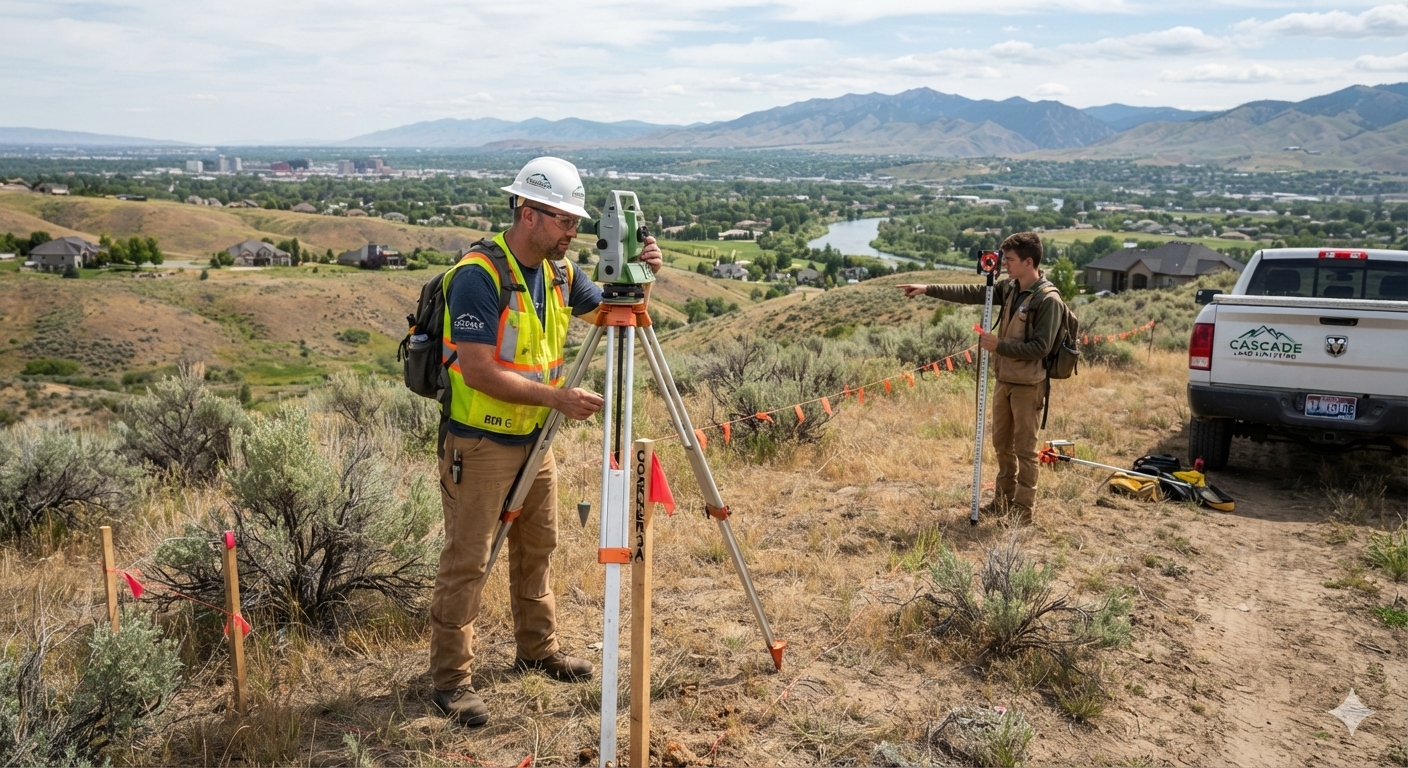
The slope, or grade, may require engineering. In that case, the project may also need a soil test and topographic survey. These reports give the engineer the information needed to design a functional, structurally sound driveway, foundation, retaining wall, or drainage plan.
Some properties have a gentle slope that only needs minor grading. Others have a steeper grade that requires engineering, retaining walls, stepped foundations, or a different floor plan. The grade percentage, home location, driveway route, and utility layout all help determine how much planning the site needs.
Before choosing a home design, homeowners should understand how the land will shape the project. The foundation is one of the first considerations. Will the home need a standard foundation, a stepped foundation, or a walkout basement? A qualified expert should complete a site evaluation before major design decisions are made.
How Building on Sloped Land in Idaho Affects the Foundation
Many homeowners assume slope only matters when a property feels steep. That is not always true.
Even a small drop in elevation can affect the foundation design. A one-foot elevation change over a short distance may require adjustments to the foundation, grading, garage approach, or drainage plan.
On sloped land, the foundation may need to step down with the terrain. This means one section of the foundation sits at a different height than another section. Crews can still build a beautiful and functional home this way, but the design requires more planning than a simple flat foundation.
A stepped foundation can also affect the excavator, foundation installer, and framer. When the front and rear of the foundation sit at different heights, the framer may need to build a pony wall on the low end of the home so the floor sits level. This can create a much higher crawl space on one end of the house than the other.
These changes can affect excavation, concrete, framing, siding, and finish grading costs.
Excavation Costs Can Increase on Sloped Land
Excavation is one of the biggest factors when building on sloped land in Idaho.
Crews may need to cut into the slope, move soil, create a level building pad, bring in fill material, haul soil away, or compact different areas of the site. Each of these steps can add cost.
The amount of earth moved depends on the slope, soil conditions, home placement, driveway location, and foundation design. A home tucked into the hillside may need more excavation than a home placed on a flatter section of the property.
If excavation spoils need to leave the property or move to a different area, trucking may be required. Trucking materials on, off, or around the site can add significant cost.
Soil and rock also matter. If crews encounter large rocks, unstable soil, roots, or hard material, excavation may take more time and require different equipment. The project may also need new engineering to address unknown subsurface objects or soil types.
Large boulders may require larger equipment or even blasting. While they can create excavation challenges, they may also work well for retaining walls or landscaping. If you want to keep any excavated material for future use, discuss that with the excavator before crews remove it from the site.
A site visit before finalizing the design can help identify these issues early.
Spoils Need a Plan
When crews excavate a building pad, they create spoils. Spoils are the soil and material removed from the site.
On larger acreage properties, crews may be able to keep that material on site and use it for grading, berms, landscaping, or other areas of the property. This can save money.
If crews cannot reuse or store the material on site, they may need to haul it away. Trucking soil or rock off site can add cost quickly. Bringing new material back in can add even more.
Sometimes homeowners want to keep excavated soil on site to create berms for privacy or add dimension to the landscaping. This is why soil movement should be part of the site plan from the beginning.
Driveway Design When Building on Sloped Land in Idaho
A driveway that works on flat land may not work on sloped land.
Steep driveways can create problems with access, drainage, winter conditions, maintenance, and emergency vehicle use. Concrete trucks, framing deliveries, excavation equipment, septic installers, well drillers, and utility crews also need safe access during construction.
The driveway may need a different route, more gradual grade, switchback, culvert, retaining wall, or additional road base. The best-looking route may not always be the most practical route.
Idaho Impact Homes designs driveways to accommodate guest parking, garage access, and a turnaround location for large trailers or guest vehicles. Creating this space on sloped land can increase costs significantly.
Drainage is especially important. Water should shed away from the driveway instead of washing across it. If water cuts across the road, it can create ruts, erosion, soft spots, and long-term maintenance issues. The drainage plan may require culverts or even small bridges, which add material and labor costs to the project.
When building on sloped land in Idaho, homeowners should plan the driveway early.
Drainage Planning for Sloped Land in Idaho
Water always needs somewhere to go.
On sloped land, water may move faster across the property. Poor drainage can create erosion, muddy areas, driveway washouts, standing water near the foundation, or damage to landscaping and outdoor living areas.
Drainage planning may involve grading, swales, culverts, drain rock, French drains, retaining walls, or other improvements. The right solution depends on the slope, soil, driveway location, home placement, and surrounding land.
Drainage should also work with the septic system, well location, landscaping, and future structures. Planning these items separately can create conflicts later. For example, if a septic drain field sits where water pools after rain or snowmelt, the drain field may not last as long.
A strong site plan considers how water will move before construction begins.
Retaining Walls May Be Needed
Some sloped sites need retaining walls to create usable space or support grade changes.
Retaining walls can help with driveways, walkout areas, patios, landscaping, building pads, and transitions between different elevations. They can also help control erosion when designed and installed properly.
Retaining walls can add cost, especially if they need engineering, drainage, footing work, stone facing, large boulders, or specialized installation.
They can also improve the finished look of the property. A well-designed retaining wall can make a sloped property feel more intentional and usable. Retaining walls can use many different materials, including masonry, boulders, or concrete blocks.
Landscaping on sloped land can also create more opportunities for features such as waterfalls, stone steps, terraced gardens, or layered planting areas.
Homeowners should budget for this possibility when evaluating sloped acreage.
Sloped Land Can Create Better Views
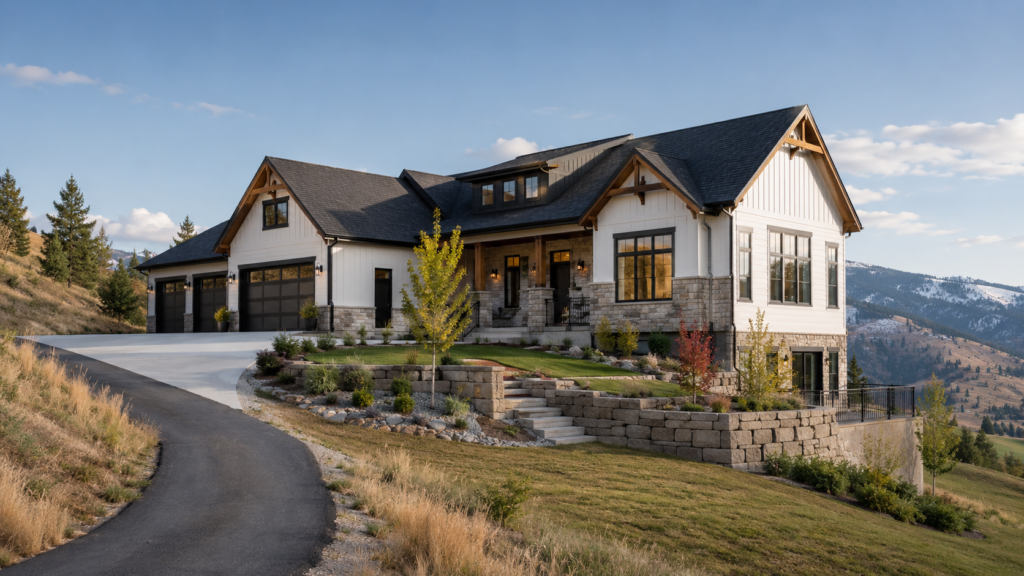
One of the main advantages of building on sloped land in Idaho is the view.
A higher homesite can capture mountain views, valley views, sunsets, sunrises, farmland, or surrounding open space. The slope can also create a more private feeling because the home may sit above nearby roads or neighboring properties.
When building on sloped land, you may also preserve future views. If your home sits high enough above nearby properties, future homes may have less impact on your view.
The view should influence the design. Window placement, outdoor living areas, covered patios, decks, great rooms, bedrooms, and kitchen orientation can all respond to the best views on the property. A view only matters if the home is designed to enjoy it. The property’s natural features should help guide the design from the beginning.
A floor plan should not ignore what the land offers. When designed well, the home can make the most of the slope instead of treating it like a problem. At Idaho Impact Homes, we believe the house design should respond to the land, not the other way around.
Floor Plans for Building on Sloped Land in Idaho
Not every floor plan works well on sloped land.
A stock floor plan designed for a flat lot may need major changes before it works on acreage with slope. Garage placement, entry location, foundation design, deck placement, patio access, and window layout may all need adjustment. In this situation, it may be best to customize the floor plan or design an entirely new custom floor plan.
Some sloped properties work well with a daylight basement or walkout lower level. Others may need a stepped foundation or a floor plan that stretches along the contour of the land.
Sometimes a daylight basement creates the best way to access the backyard without stairs. It can also add space for game rooms, storage, guest space, or even a cellar.
The goal is to choose or design a floor plan that fits the site naturally. This can make the home more functional, reduce unnecessary excavation, and improve the finished look of the property.
Outdoor Living Can Be More Interesting
Sloped land can create outdoor living opportunities that flat land may not offer.
A patio can sit below the main floor. A deck can overlook the property. A walkout basement can open to a lower yard. Stone steps, terraces, retaining walls, and planting beds can create a layered landscape.
Some outdoor features work especially well with elevation change. For example, a waterfall pool or terraced landscape design may require a dramatic change in grade. A flat property may not allow for the same effect.
These features can make the home feel custom and connected to the land.
However, outdoor living should be planned early. If patios, decks, retaining walls, steps, or future landscaping are added later without a full plan, they may cost more or conflict with drainage, utilities, or septic areas.
Idaho Impact Homes completes site plans with landscaping and outdoor living in mind. The outside of the house should be just as functional and beautiful as the inside of the house.
Utilities Need Thoughtful Routes
Power, water lines, septic, propane, communication lines, and drainage systems all need practical routes.
If the driveway crosses over a utility line, crews may need to install a sleeve under the driveway before pouring it. This allows utilities to pass from one side of the driveway to the other without going around the house or breaking concrete later.
On sloped land, trenching may become more complicated. Crews may need to account for grade changes, rock, access, erosion control, and equipment movement. Utility routes should avoid septic areas, future buildings, drainage paths, and major driveway conflicts.
Water lines can also cross under sidewalks. This may require a sleeve under the sidewalk so landscapers can properly access flower beds or irrigation areas in the future.
The location of the home also affects utility cost. A homesite farther from the road may create a longer power route, longer trenching distance, and more site work.
Sometimes the main line infrastructure needs to extend to reach the property corner. This means the homeowner may be responsible for the service line on the property and the main line extension along the road. Homeowners should always consider this before purchasing land.
Utility planning should happen with the home location, driveway design, well location, septic area, and future property use in mind. If utilities cross under one another, the risk of damage increases during installation. Utility lines work best when they run parallel or remain completely separate whenever possible.
Septic Placement Can Limit the Build Area
On acreage without city sewer, septic placement matters.
The septic system needs suitable soil, proper setbacks, drain field space, and often a replacement drain field area. Slope can affect where the system can go and what type of system the property requires.
If a septic system needs to drain uphill because of the slope and location, the system may need upgraded equipment. A macerator pump may need to go inside the septic tank so waste can move uphill to the drain field. This also requires an alarm system that alerts the homeowner if the septic tank becomes too full.
Some properties have enough acreage but limited practical septic locations because of grade, drainage, soil, wells, waterways, or setbacks. If the selected septic location has unsuitable soil for proper drainage, the property may require an above-ground drain field.
Instead of placing drain pipes underground and relying on gravity, an above-ground system places the drain pipes above ground, covers them with a mound of dirt, and uses evaporation. This means irrigation water should not be added to the mound, and weed block should not be used there. Either one could affect the lifespan or usability of the septic system.
If the septic system needs to sit in a specific area, that may affect where the home, driveway, well, shop, or outdoor living spaces can go. Sometimes the available septic area is so limited that the home orientation or utility layout needs to change.
Before building on sloped land in Idaho, homeowners should understand septic feasibility and placement.
Engineering May Be Required
Sloped properties often need more professional input than flat properties.
Depending on the site, the project may require a structural engineer, civil engineer, geotechnical report, topographic survey, drainage plan, or retaining wall design.
Engineering adds cost, but it can also prevent expensive problems. It helps ensure the foundation, driveway, retaining walls, drainage, and grading plan match the conditions on the property.
If water does not drain properly away from the home, it can create opportunities for mold, rot, and settling.
Engineering should not automatically scare buyers away from sloped land. It simply means the property needs the right planning before construction begins.
Building on Sloped Land Can Affect the Timeline
Sloped land can add steps to the project timeline.
The project may need additional site evaluation, survey work, engineering, excavation planning, drainage design, retaining wall coordination, or driveway planning. Weather can also affect sloped properties more, especially when the ground becomes muddy or difficult to access.
Snow and ice are also major concerns on sloped land. If the slope is too steep or the road does not support winter driving, vehicles may not stop once they begin sliding.
When the team plans these items early, the project can move more smoothly. When the team discovers them late, they can delay permitting, excavation, foundation work, or utility installation.
The earlier the site is evaluated, the easier it is to create a realistic schedule.
Common Costs to Consider on Sloped Land
When evaluating sloped acreage, homeowners should consider more than the cost of the house.
Common costs may include:
Topographic survey
Engineering
Geotechnical review
Extra excavation
Cut and fill
Soil hauling
Retaining walls
Additional drainage work
Longer or steeper driveway
Temporary construction access
Foundation adjustments
Stepped foundation walls
Decks or elevated patios
Utility trenching
Erosion control
Finish grading
Landscaping transitions
Not every sloped property will need every item. However, these costs should be discussed early so the budget reflects the land.
How Idaho Impact Homes Approaches Sloped Land
Idaho Impact Homes looks at the land before finalizing the design.
We evaluate the slope, driveway access, drainage, home placement, utility routes, septic feasibility, well location, excavation needs, and future property use. We also consider how the floor plan should respond to the land, views, and outdoor living areas.
Building on sloped land in Idaho requires careful planning, but it can also create a beautiful custom home that feels connected to the property.
The right plan can help homeowners make the most of the land while avoiding unnecessary cost, rework, and delays.
FAQ
Is building on sloped land more expensive?
Building on sloped land can cost more than building on flat land because it may require more excavation, engineering, drainage work, retaining walls, or foundation adjustments.
Can I use a stock floor plan on sloped land?
Sometimes, but many stock floor plans need changes before they work well on sloped acreage. The driveway, foundation, garage placement, views, septic, utilities, and outdoor living areas should all be considered.
Does sloped land always need a retaining wall?
No. Some sloped properties can be graded without retaining walls. Others need retaining walls for driveways, patios, walkout areas, building pads, or erosion control.
Should I evaluate slope before buying land?
Yes. Buyers should understand slope, drainage, driveway access, septic feasibility, utilities, and excavation needs before buying acreage.
Can Idaho Impact Homes help evaluate sloped land?
Yes. Idaho Impact Homes can help evaluate sloped acreage and determine how the land may affect the home design, budget, timeline, and site development plan.
Planning to Build on Sloped Land in Idaho?
If you are considering acreage in Caldwell, Nampa, Middleton, Star, Eagle, Kuna, Boise, or the surrounding Treasure Valley, Idaho Impact Homes can help you evaluate the property before you build.
Contact Idaho Impact Homes to schedule a consultation and understand how slope, drainage, driveway access, utilities, septic, and excavation may affect your custom home.