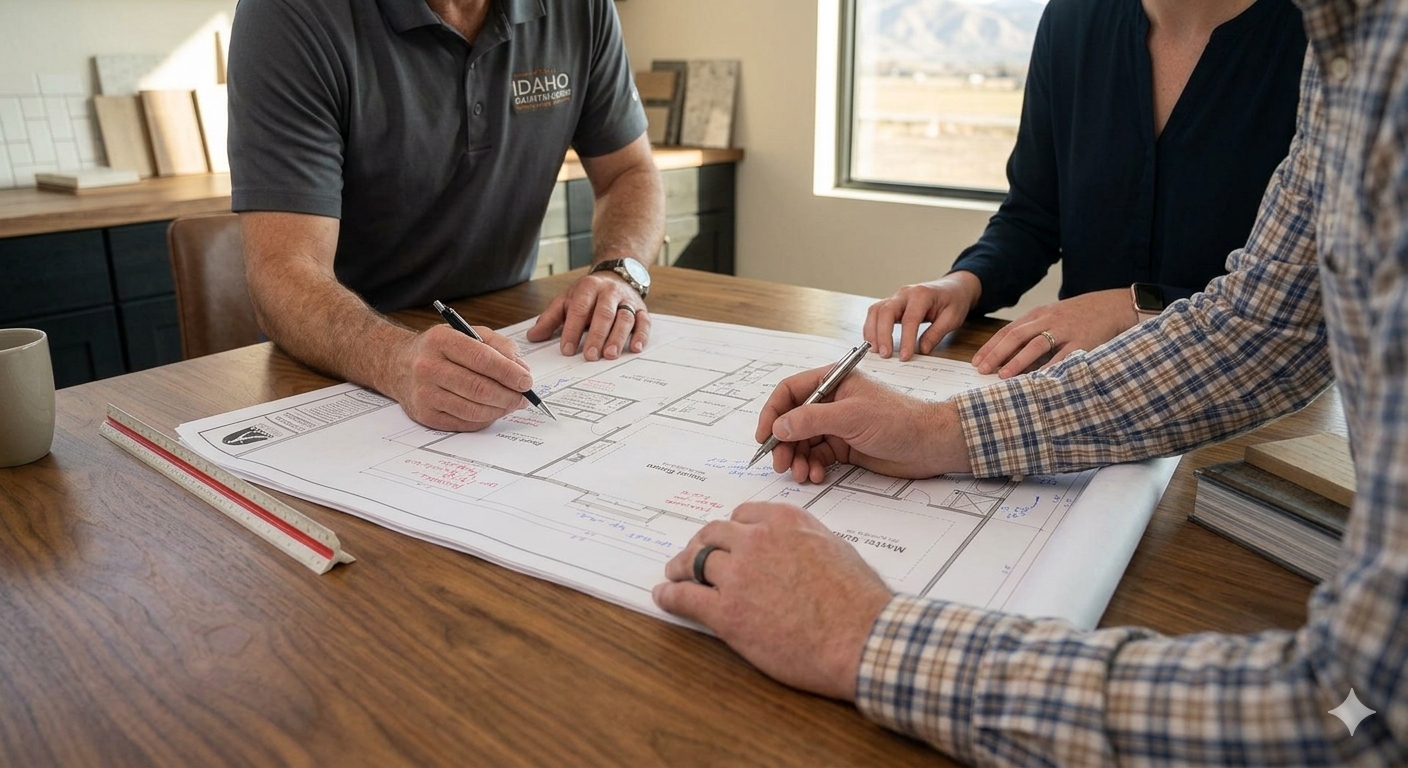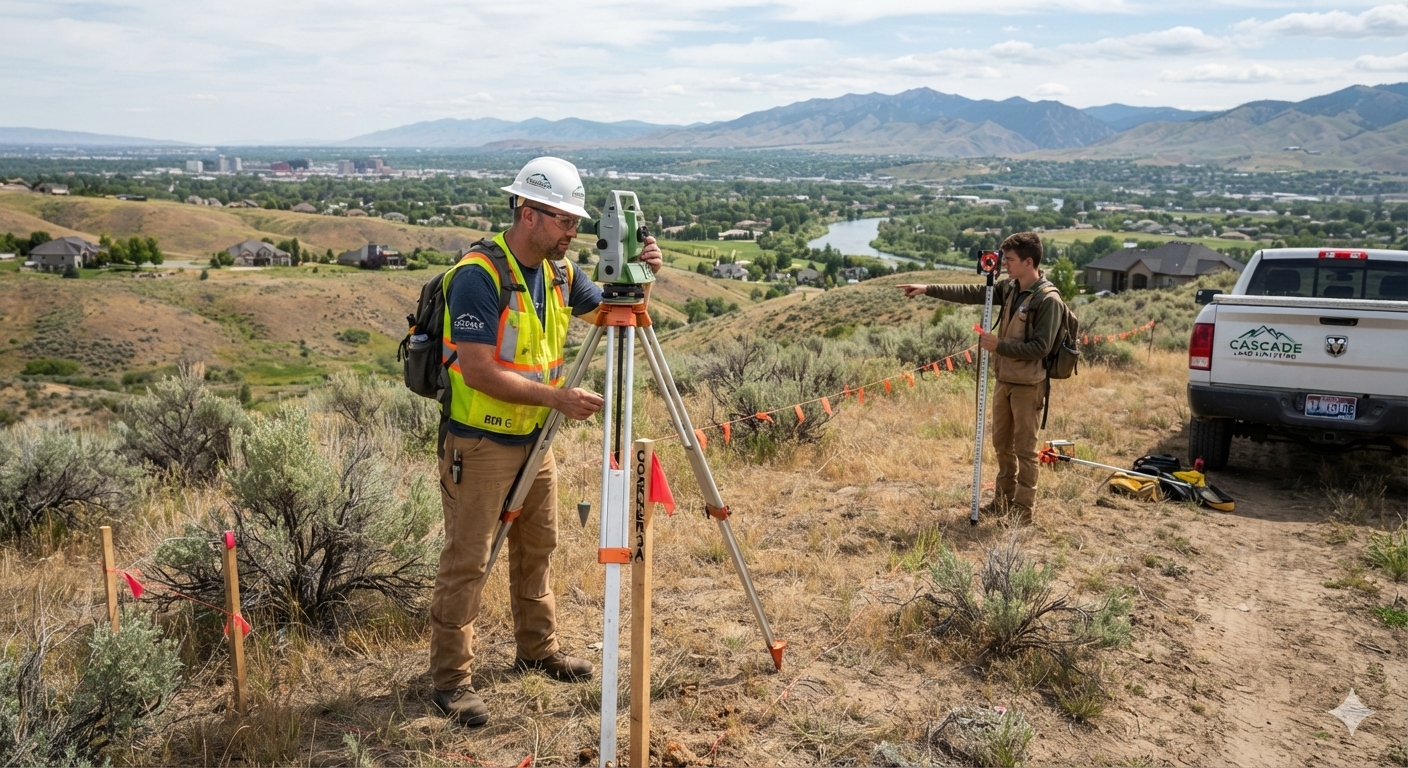
Many homeowners wonder exactly when to bring a custom builder into their home-buying timeline. Waiting until after you close on a property can accidentally expose you to expensive structural surprises. Involving a builder during your initial feasibility study or 30-day escrow period allows you to walk the lot together, evaluate the dirt, and protect your budget before making a permanent land purchase.
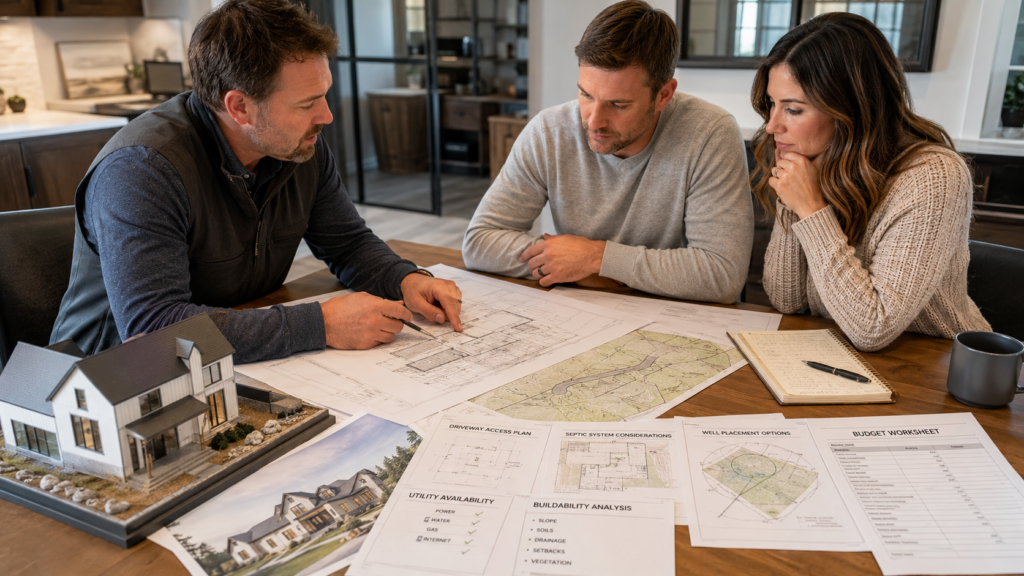
Why You Should Consider a Builder Before Buying Land in Idaho
Contacting a builder before buying land in Idaho can help you look beyond the obvious features of the property.
Most buyers notice the view, location, acreage, privacy, and price. Those things matter, but they do not tell the whole story. A builder looks at how the land will function as a homesite.
That includes questions like:
Where will the home sit?
How will the driveway access the property?
Is there room for septic?
Where will the well go?
How far is power from the homesite?
Will the land need major grading?
Are there drainage concerns?
Will easements affect the build area?
Can heavy equipment reach the site?
Will the permitting process be simple or complicated?
These questions can affect the budget long before the home is framed.
Land Price Is Only One Part of the Budget
The purchase price of the land does not show the full cost of building.
A lower-priced parcel may seem like a good deal until you add the cost of a long driveway, power extension, well drilling, septic design, drainage work, grading, retaining walls, or access permits.
A more expensive parcel may actually cost less to develop if it already has good access, favorable soil, nearby utilities, and a practical building site.
This is why working with a builder before buying land in Idaho can be so helpful. A builder can help you compare properties based on total project cost, not just price per acre.
The right question is not only, “Can I afford this land?”
The better question is, “Can I afford to make this land buildable for the home I want?”
A Builder Can Help Evaluate Buildability
Not every parcel works equally well for building.
Buildable land needs more than enough square footage. It needs legal access, proper zoning, enough usable space, septic feasibility or sewer access, water access, power availability, suitable drainage, and a practical homesite.
A property may look large, but slope, easements, setbacks, irrigation features, septic reserve areas, or floodplain concerns can reduce the area you can actually use.
Contacting a builder before buying land in Idaho can help identify these concerns early. Not every issue has to stop the project. Design, engineering, grading, or site planning can solve some concerns. However, you should know about those concerns before closing, not after.
Septic Feasibility Should Be Checked Early
If the property does not connect to city sewer, septic feasibility becomes one of the most important questions.
A septic system needs suitable soil, proper setbacks, drain field space, and often a replacement drain field area. The system also needs to work with the home, well, driveway, landscaping, and future property use.
One of the first steps is applying for a septic permit. After that, the health department coordinates with the applicant and schedules an on-site meeting with the chosen excavator. During this meeting, the inspector reviews soil types at specific depths and checks for a high water table.
If the land cannot support a standard septic system, it may need a more complex or engineered system. That can add cost, take more time, and affect where the home can sit.
Some complex septic system designs can increase the size of the drain field, and the tanks can take up valuable space. It is always best to keep a contingency in the budget that can supplement the septic budget if the design becomes complex.
A builder cannot replace the health department or septic designer, but a builder can help you understand why septic placement matters and what questions to ask before closing.
Before buying land, ask whether anyone has completed a septic evaluation. If not, your offer may need a due diligence period that allows soil testing before the purchase becomes final.
Companies such as Geotek can complete soil testing. They can identify the soil type at each depth, and the health department can use that information to help determine what type of septic system the property may require.
Wells Can Add Cost and Uncertainty
Many acreage properties need a private well.
A well can add uncertainty because the final cost often depends on drilling depth, ground conditions, water quality, pump needs, drilling access, and trenching distance to the home. Sometimes the well needs a special screen at the bottom. The driller usually cannot confirm that until the well is fully drilled and testing is complete.
Nearby well logs can provide helpful context, but they cannot guarantee what your property will require. A neighboring parcel may have water at one depth while your property needs a deeper well.
Many wells in the Treasure Valley are close in depth to neighboring wells, but water quality can change drastically. Make sure to consider what type of water treatment system you may need, if any. The design depends on your water quality and can add cost to your build.
Drill rig access also matters. Well drilling rigs are large, heavy vehicles. If the land is soft, muddy, snowy, steep, or difficult to access, the well location may require more planning.
Sometimes homeowners assume an existing access road can support large equipment. That may be true during the drier seasons of the year, but one poorly timed rain can strand the drill rig or tear up the road until crews can no longer use it.
Contacting a builder before buying land in Idaho can help you think through how the well location works with the home, driveway, septic system, and utilities.
Power May Cost More Than Expected
Nearby power does not always mean inexpensive power.
Power costs can depend on the distance from existing infrastructure, transformer needs, overhead versus underground service, easements, trenching, temporary construction power, and utility company timelines.
If the homesite sits far from the road, the power route may become much longer. If the property needs an extension from existing electrical infrastructure, the cost and schedule can increase.
Review power before finalizing the homesite. A private location with excellent views may still make sense, but you should understand the utility cost early.
During the permitting process, Idaho Impact Homes meets with Idaho Power to determine the location and design of the electrical service. We schedule this early because framers need power for their tools and equipment.
A builder can help you evaluate how power routes work with the driveway, well, septic system, future shops, outdoor living areas, and overall site plan.
Driveway Access Can Change the Project Cost
Driveway access is one of the most overlooked parts of buying acreage.
Some properties already have an approved approach or driveway. Others need a new road approach, private road approval, culvert, bridge, ditch crossing, grading, gravel, or temporary construction access.
It is important to determine whether the road department will allow access and what requirements it has for approval. Sometimes a culvert or bridge needs to be installed. The road department may also require specific materials and construction standards.
A long driveway can also increase utility costs if power, water lines, or communication lines follow the driveway route.
Slope can add more cost. A steep driveway may need more grading, drainage, retaining, switchbacks, or a different route. Drainage matters because it helps prevent the road from washing out. If water does not shed off the road effectively, maintenance costs can increase.
Construction access matters too. The property needs to support concrete trucks, framing deliveries, excavation equipment, well drillers, septic installers, utility crews, and emergency vehicles.
This means crews must lay down specific materials and compact them properly. If a large vehicle gets stuck in the construction access area, other trades and material deliveries may not be able to reach the work site. That can cause significant delays while crews fix the problem.
Contacting a builder before buying land in Idaho can help you understand whether the driveway looks simple or whether it may become a major site cost.
Zoning, Setbacks, and Easements Matter
Land can look usable while still having restrictions that limit where you can build.
Zoning may affect whether the land allows a single-family home, how many structures you can build, what animals you can keep, whether you can use the land for agriculture, and what approvals you need.
Setbacks may limit how close the home can sit to property lines, roads, irrigation ditches, canals, waterways, wells, septic systems, and easements. Some setbacks in the city can be as close as five feet. In rural areas, setbacks often run much larger. The county Planning and Zoning department uses setbacks to help maintain the integrity of the land and make sure new projects fit with surrounding parcels.
Easements can also affect the build area. A property may have utility easements, access easements, irrigation easements, shared driveway agreements, canal rights-of-way, or private road restrictions.
Always check with your realtor, title company, or Planning and Zoning department to identify any easements in your jurisdiction.
Before buying land, homeowners should review title documents, parcel information, zoning requirements, and recorded easements. A builder can help interpret how those restrictions may affect the homesite, driveway, utilities, and future property use.
The Floor Plan Should Fit the Land
Many buyers fall in love with a floor plan before they fully understand the property.
That can create problems.
A floor plan that works well on a subdivision lot may not work well on acreage. The driveway approach, slope, views, sun exposure, garage placement, septic location, well placement, power route, outdoor living areas, and privacy concerns can all affect the design.
When you involve a builder before buying land in Idaho, you can begin thinking about whether the property supports the type of home you want. Idaho Impact Homes asks each client about their family’s lifestyle. This helps determine the floor plan, orientation, and location of the house.
The goal is not to force a floor plan onto the land. The goal is to design the home around the land so it feels intentional, functional, and cost-conscious.
A Builder Can Help You Ask Better Questions
A builder can help you know which questions to ask before you close.
For example:
Is the property legally buildable?
What jurisdiction controls the building permit?
Does the driveway approach already have approval?
Will a state highway access permit be needed?
Is city sewer available?
If not, can the land support septic?
Is city water available?
If not, where might the well go?
How far is power from the likely homesite?
Are there easements or irrigation rights-of-way?
Will slope or drainage affect the build?
Can heavy equipment access the site safely?
Are there CC&Rs or design restrictions?
Does the land support future shops, barns, or outdoor living plans?
These questions can save time, money, and frustration.
Due Diligence Before Buying Land
Due diligence is the period when buyers investigate the property before finalizing the purchase.
This is the ideal time to involve a builder, septic professional, well driller, surveyor, engineer, real estate agent, title company, and local jurisdiction when needed.
A strong due diligence period may include:
Reviewing zoning
Reviewing setbacks
Checking recorded easements
Confirming legal access
Reviewing driveway approach requirements
Researching nearby well logs
Checking septic feasibility
Confirming power availability
Reviewing irrigation rights
Checking slope and drainage
Estimating major site costs
Reviewing permitting requirements
The more you understand before closing, the better decisions you can make.
When Land May Still Be Worth Buying
A property with challenges is not automatically a bad purchase.
Some of the best custom homes are built on land that required thoughtful planning. Slope can create dramatic views. A longer driveway can create privacy. A more complex site can still support a beautiful home when the design responds to the property.
The issue is not whether the land has challenges.
The issue is whether the challenges fit your budget, timeline, and long-term goals.
Working with a builder before buying land in Idaho can help you understand the difference between a manageable site challenge and a costly surprise.
How Idaho Impact Homes Helps Evaluate Land
Every Idaho Impact Homes project begins with understanding the property.
Before construction begins, we look at the site as a whole. This includes access, driveway planning, septic feasibility, well placement, power routes, grading, drainage, home orientation, outdoor living, and future use of the land.
We also consider how the home should sit on the property, how the floor plan should respond to the land, and where major site costs may appear.
Idaho Impact Homes helps homeowners make informed decisions before they spend major money on plans, permits, excavation, utilities, or construction.
FAQ
Should I contact a builder before buying land?
Yes. A builder can help you evaluate access, septic, wells, power, grading, drainage, easements, permits, and overall buildability before you close.
Can a builder tell me if land is buildable?
A builder can help identify likely buildability concerns and guide you toward the right professionals or agencies. The city, county, health department, utility company, or other jurisdiction may still make the final approvals.
What should I check before buying acreage?
Before buying acreage, review legal access, zoning, setbacks, septic feasibility, water access, power availability, easements, drainage, slope, and permitting requirements.
Can Idaho Impact Homes look at land before I buy it?
Yes. Idaho Impact Homes can help evaluate acreage and rural property before you buy or before you finalize your custom home design.
Is cheaper land always a better deal?
No. Lower-priced land may cost more to develop if it lacks access, utilities, septic feasibility, water, drainage, or a practical homesite.
Planning to Buy Land in Idaho?
If you are considering acreage in Caldwell, Nampa, Middleton, Star, Eagle, Kuna, Boise, or the surrounding Treasure Valley, Idaho Impact Homes can help you evaluate the property before you commit.
Contact Idaho Impact Homes to schedule a consultation and understand the site costs, utility needs, buildability concerns, and design opportunities before buying land.