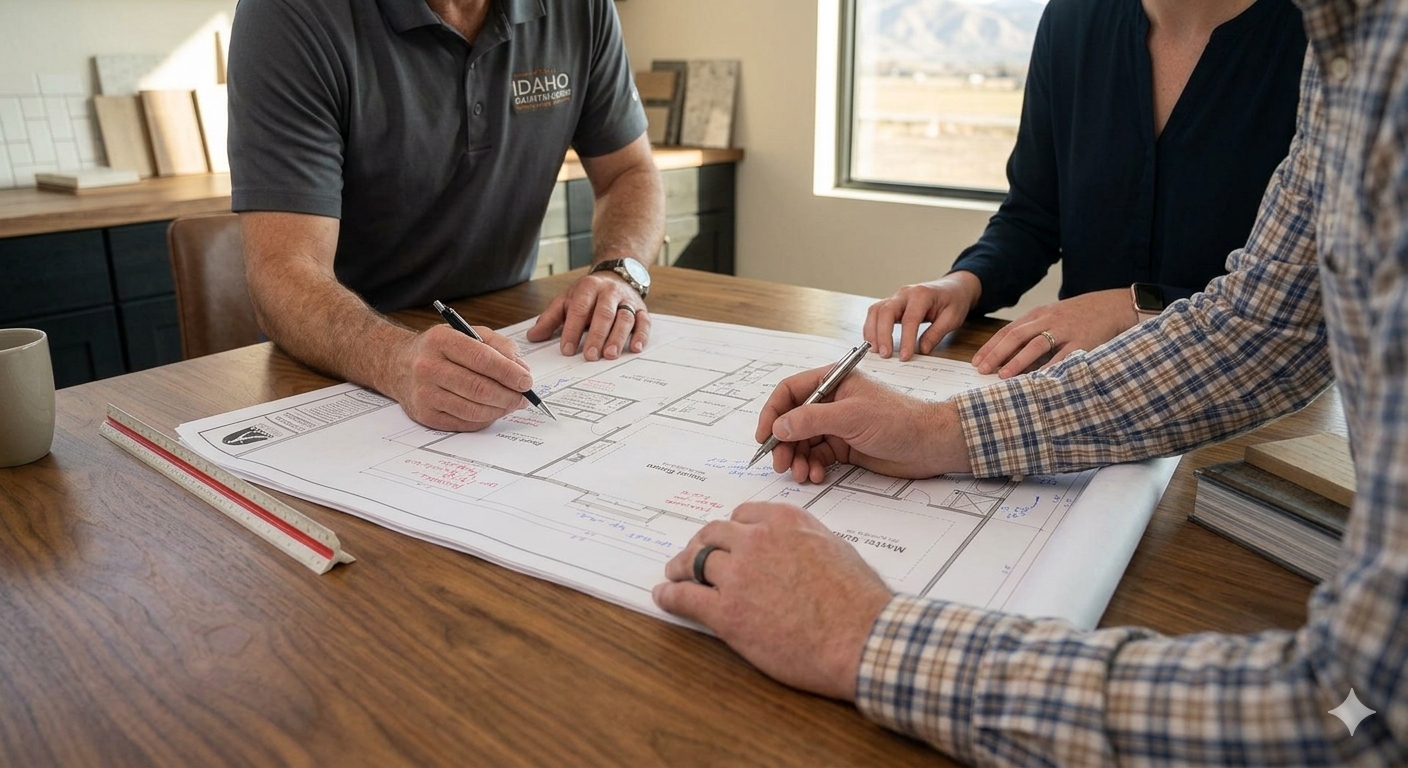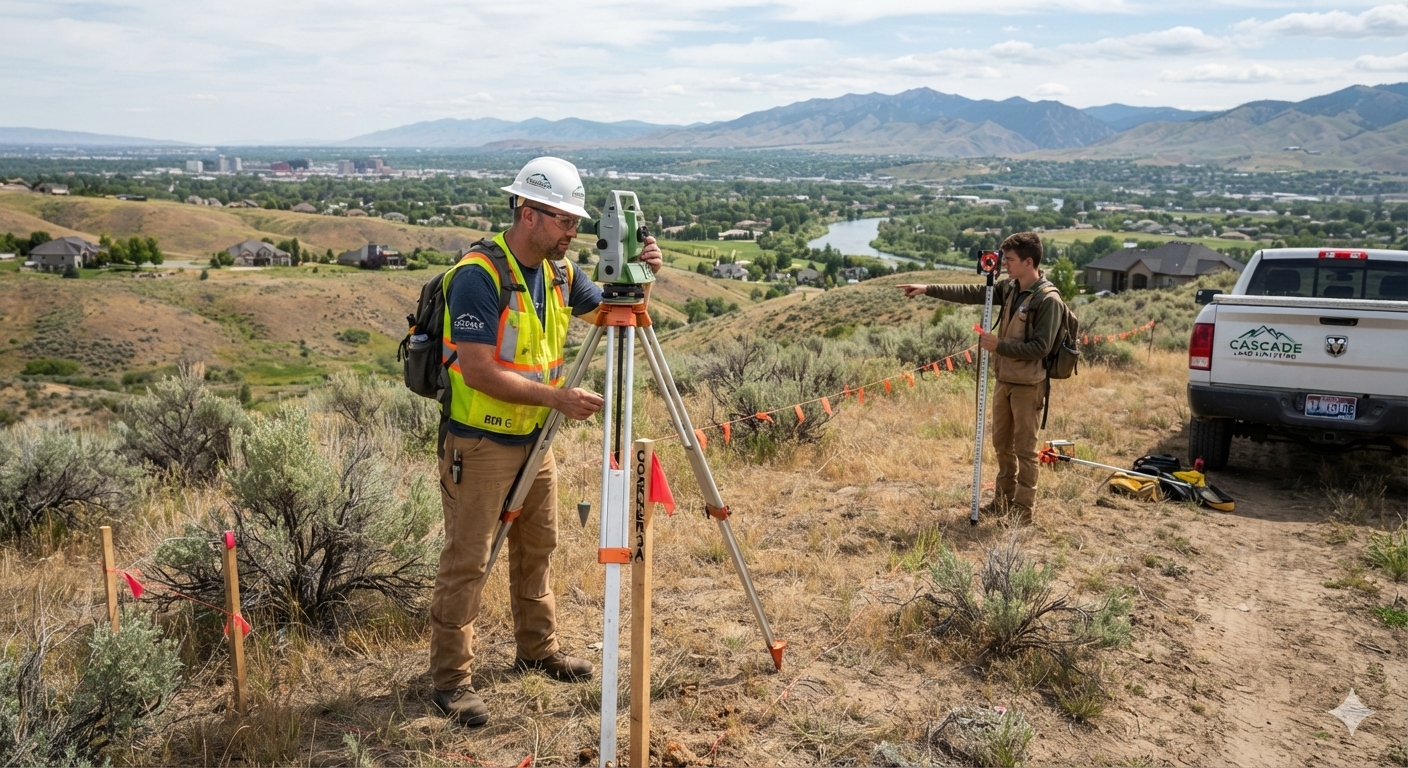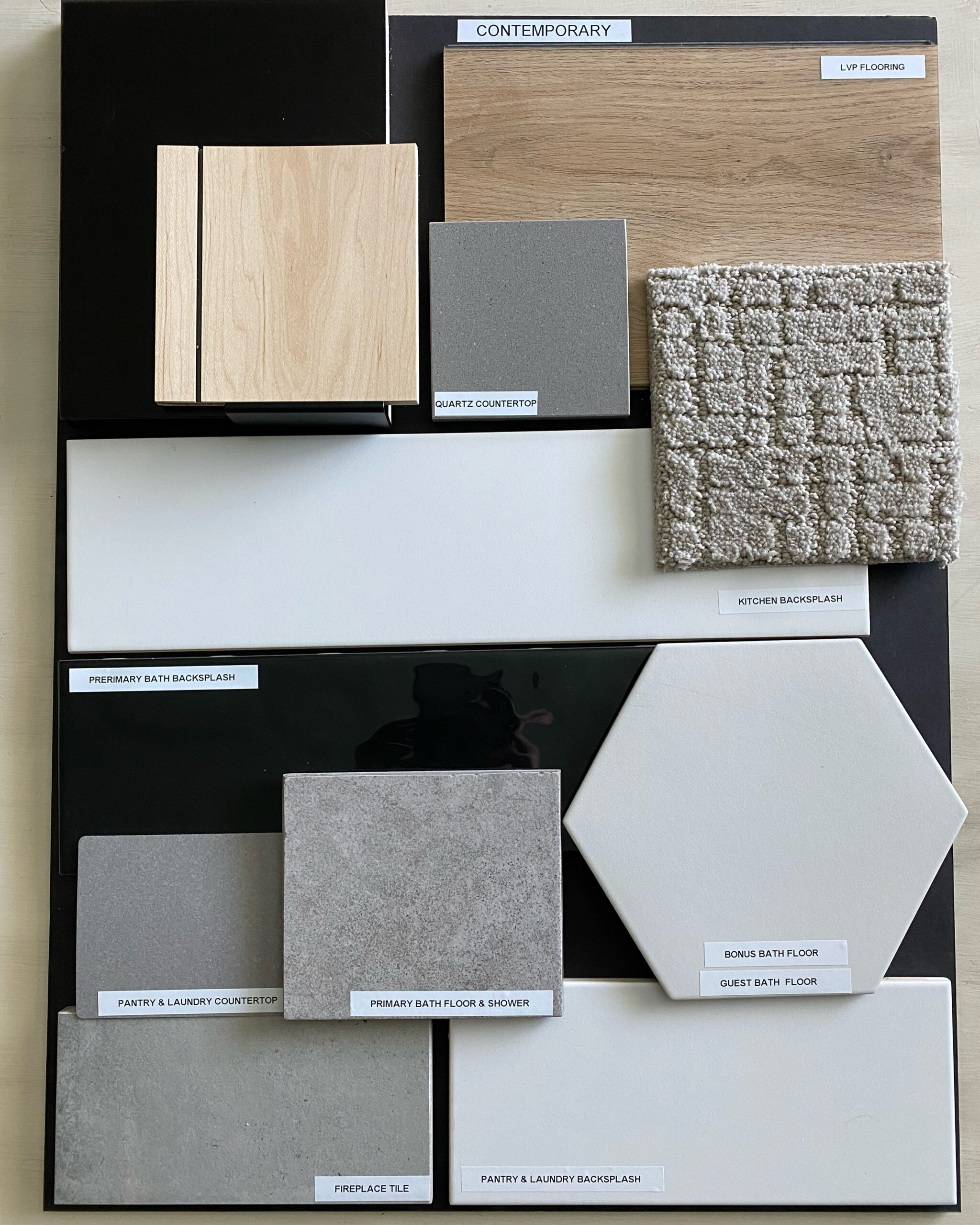
Questions to Ask a Custom Home Builder before you build should cover more than price. Before choosing a builder in Idaho, homeowners should ask about estimates, site costs, land evaluation, selections, permits, communication, schedules, change orders, and jobsite management. These questions to ask a custom home builder can help you compare builders more clearly before signing a contract.
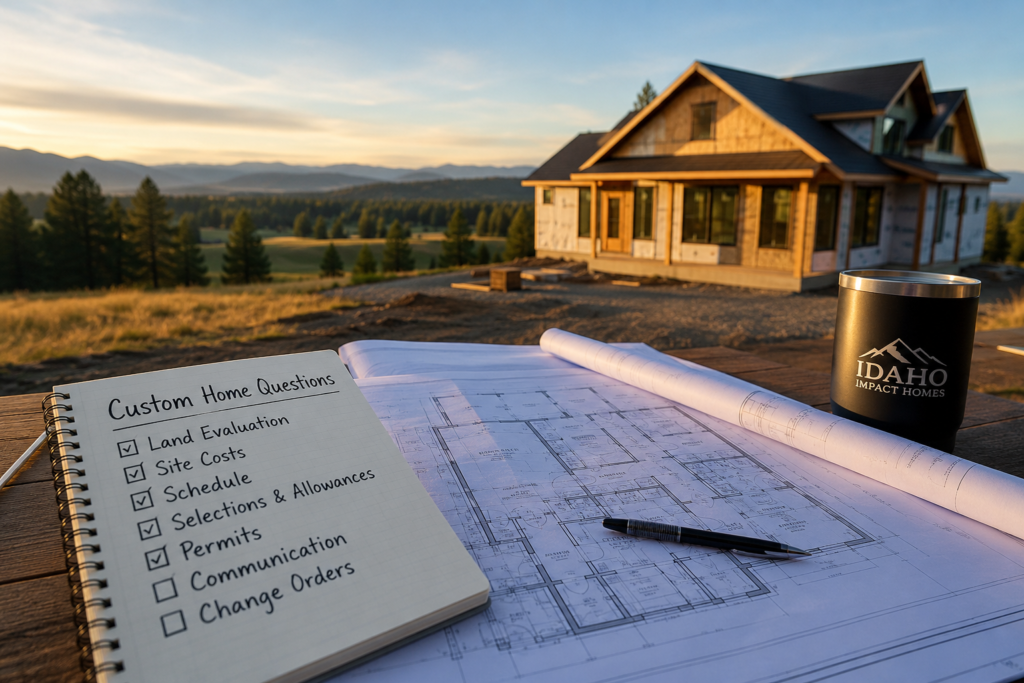
Why Questions to Ask a Custom Home Builder Matter
Building a custom home is a long process with many decisions, details, and people involved.
A strong builder should understand more than the house itself. The land, utilities, driveway access, septic systems, wells, permits, engineering, selections, scheduling, subcontractor coordination, and local requirements all matter.
This is especially important when building on acreage or rural property. Land can change the budget and timeline quickly. Driveway access, utility routes, drainage, slope, soil conditions, septic placement, and well location can all affect the project before framing begins.
A custom home builder in Idaho should help homeowners understand the full project, not just the floor plan.
Do You Help Evaluate Land Before We Build?
One of the first questions to ask is whether the builder helps evaluate land before design and construction begin.
If you already own land, the builder should review the property before finalizing the home design. If you are still shopping for land, it is smart to bring a builder in before closing. That step can help you avoid expensive surprises.
Once a seller accepts your offer, the due diligence period usually begins. During that time, you should confirm access, soil testing, utilities, septic feasibility, easements, setbacks, and any other property concerns. If the land does not fit the project, you may still have time to cancel the purchase before closing.
Early land evaluation can help reveal issues before you spend more money on plans, permits, or construction.
A builder does not replace every professional involved in land due diligence. You may still need a surveyor, engineer, septic designer, well driller, title company, lender, health department, or local jurisdiction. Even so, a good custom home builder in Idaho can help you understand which questions need answers and who should answer them.
A helpful question to ask is:
“Do you evaluate the land before finalizing the estimate and build contract?”
If the answer is no, ask how the builder accounts for site conditions and land-related costs.
Questions to Ask a Custom Home Builder About the Estimate
Every builder prepares estimates a little differently.
Some estimates include site work, utility coordination, driveway access, realistic allowances, and permitting. Others focus mainly on the house itself. Without a clear scope comparison, the lower number may look better than it really is.
Ask what the estimate includes and what it excludes.
A complete estimate should clearly show whether these items are included:
Land development
Driveway access
Temporary construction access
Excavation and grading
Foundation work
Septic system
Well installation
Power service
Utility trenching
Permits
Engineering
Design work
Selections and allowances
Cabinets
Countertops
Flooring
Tile
Appliances
Lighting
Plumbing fixtures
Exterior materials
Landscaping allowance
Contingency
Builder fee or management fee
Each estimate does not need to look identical. You do need to understand what you are comparing.
Idaho Impact Homes keeps a detailed selection sheet and gives homeowners access to it. That level of detail helps reduce confusion and lowers the risk of surprise costs later.
A strong follow-up question is:
“Can you walk me through exactly what this estimate includes and what may be billed separately?”
That question often reveals whether the estimate reflects the full project or only part of it.
Questions to Ask a Custom Home Builder About Site Costs
Site costs are one of the easiest parts of a project to underestimate.
On acreage or rural property, land-related costs can become a major part of the budget. Driveway work, excavation, grading, drainage, culverts, soil hauling, retaining walls, temporary construction access, utility trenching, septic systems, wells, power, and erosion control may all need to be considered.
Some costs can be estimated early. Other costs depend on final design, engineering, utility requirements, or field conditions.
What matters most is whether the builder has a clear process for budgeting the unknowns.
Ask this:
“How do you estimate site costs, and what happens if the land requires more work than expected?”
A strong answer should explain what the team has reviewed, what remains unknown, and whether the estimate includes contingency for site-related costs.
How Do You Build the Project Schedule?
A project schedule involves much more than the day framing begins.
Before construction starts, the project may require design work, engineering, permits, selections, site prep, utility coordination, excavation, and foundation planning. Once work begins, inspections, trade availability, weather, and material lead times can all affect the schedule.
At Idaho Impact Homes, we also build time into the schedule for internal quality-control inspections. Our team uses checklists to review each phase and verify that every trade meets our standards before the next trade begins.
When you ask about the schedule, listen for realism. A good timeline accounts for pre-construction work, permitting, major decision deadlines, and utility coordination.
Useful questions include:
“When does the schedule officially begin?”
“Which steps need to happen before construction starts?”
“How do you track the schedule?”
“How often will we receive updates?”
“Which delays happen most often?”
“How can selections affect the schedule?”
Homeowners should also understand their own role in keeping the schedule on track. Delayed decisions, late selections, and major changes can all slow a project down.
Questions to Ask a Custom Home Builder About Selections and Allowances
Selections can move the budget quickly.
Cabinets, countertops, flooring, tile, plumbing fixtures, lighting, appliances, windows, doors, siding, roofing, masonry, hardware, and paint all affect the final cost of the home.
Allowances matter for that reason. An allowance is a budget amount set aside for a specific category. If the allowance is too low, the estimate may look attractive at first. Later, the homeowner may go over budget once real selections begin.
Ask questions such as:
“How do you set allowances?”
“Are the allowances realistic for the type of home we want?”
“What products or quality level are these allowances based on?”
“What happens if our selections exceed the allowance?”
“Where do you document selection changes?”
A strong custom home builder in Idaho should guide homeowners through the selections process before construction starts. The process should feel organized, clear, and easy to follow.
At Idaho Impact Homes, transparency around selections is important. Homeowners should understand what they are choosing, how those choices affect the budget, and when each decision needs to be made.
How Do You Communicate During the Build?
Communication can shape the entire building experience.
During a custom home build, questions, updates, decisions, and occasional changes will come up. The builder should have a clear communication process from the start.
Ask these questions:
“Who will be my main point of contact?”
“How often will I receive updates?”
“Which communication methods do you use?”
“Where do you document decisions?”
“What happens when an urgent question comes up?”
“How will you communicate schedule changes?”
Good communication reduces confusion and creates a written record of decisions, selections, approvals, and changes.
Homeowners should not have to chase routine updates. They should know who to contact, when to expect information, and how the builder will track decisions.
Who Manages the Jobsite?
The person who sells the project is not always the person who manages the build.
Ask who will actually be on site, who manages subcontractors, who checks quality, and who coordinates inspections.
Helpful questions include:
“Who manages the jobsite day to day?”
“How often is someone from your team on site?”
“Which person coordinates subcontractors?”
“What quality checks happen before the next trade begins?”
“Who handles jobsite issues?”
“How does your team keep the site organized and safe?”
Strong jobsite management affects quality, schedule, safety, and communication. A builder should be able to explain how the team will manage the project once construction begins.
This becomes even more important on acreage builds. Rural access, utility work, longer driveways, delivery logistics, equipment movement, and weather can all complicate jobsite coordination.
Questions to Ask a Custom Home Builder About Change Orders
Change orders are a normal part of many custom home projects.
Sometimes a homeowner changes direction. In other cases, a product becomes unavailable. On some projects, the site reveals a condition no one could see earlier. Occasionally, a design detail needs a practical adjustment once construction begins.
The important part is how the builder handles those changes.
Ask questions like these:
“What counts as a change order?”
“How are change orders priced?”
“Do we approve changes before work begins?”
“How do change orders affect the schedule?”
“Where do you document change orders?”
A strong change-order process protects both the homeowner and the builder. It also helps keep the budget clear and reduces surprise costs.
Try to avoid any process that depends on casual verbal approvals. Written documentation matters.
What Happens If the Land Creates Unexpected Costs?
Even with careful planning, land can create surprises.
Crews may uncover rock, unsuitable soil, drainage issues, utility conflicts, access problems, septic changes, or additional engineering needs. Weather can also complicate excavation, driveway access, and site work.
Ask the builder how the team handles those situations.
A strong answer should explain how the land gets reviewed early, how contingency is approached, and how the homeowner will receive updates if new costs appear.
Questions worth asking include:
“How do you handle unexpected site conditions?”
“How will I know if the budget needs to change?”
“Will I approve extra work before it happens?”
“Where do you document these costs?”
No builder can eliminate every unknown. A strong builder should still have a clear process for handling them.
Do You Have Experience With Acreage Builds?
Building on acreage is different from building in a standard subdivision.
Acreage projects usually require more site planning, more utility coordination, longer driveways, private wells, septic systems, drainage planning, easement review, and more interaction with multiple jurisdictions.
Experience matters here. Ask whether the builder has worked on acreage in your area and whether the team understands the added layers involved.
Good questions include:
“Have you built on acreage before?”
“What experience do you have with wells and septic?”
“How do you review driveway access requirements?”
“Have you worked with local health districts and highway districts?”
“Do you help plan for future shops, barns, guest houses, or outdoor living areas?”
A builder with acreage experience will think beyond the house itself. The team should also consider how the property works now and how it may serve the homeowner in the future.
How Do You Handle Permits and Jurisdictions?
Permitting often involves more than one building department.
Depending on the property, a project may require coordination with a city, county, highway district, health district, irrigation district, fire district, utility company, or state agency.
Ask how the builder handles permitting and jurisdiction communication.
Questions to ask include:
“Who applies for the building permit?”
“Which person coordinates with the health department for septic?”
“How are driveway approach requirements handled?”
“Who communicates with the utility company?”
“How do you track permit status?”
“What happens if the jurisdiction requires changes?”
Permit delays can affect the entire schedule, so clear coordination matters.
What Makes Your Process Different?
This question gives the builder a chance to explain how the company actually works.
Listen for specifics. A strong answer should include details about pre-construction planning, estimating, site evaluation, selections, scheduling, communication, jobsite management, trade coordination, documentation, and quality control.
Questions like these can be helpful:
“What do you do before construction starts to reduce surprises?”
“How do you help homeowners understand the full budget?”
“What systems keep projects organized?”
“How do you keep selections, schedule, and budget aligned?”
The answer should help you picture what it would feel like to work with that builder day to day.
Questions to Ask Before Signing a Build Contract
Before signing a build contract, make sure the scope, budget, schedule, and process feel clear.
Important questions include:
What exactly is included in the contract?
Which items are excluded?
How are allowances handled?
How are site costs handled?
What contingencies are included?
What happens if costs change?
How are change orders approved?
What is the estimated timeline?
Which issues could delay the project?
Who manages the jobsite?
Which person communicates with the homeowner?
How are selections tracked?
Who handles permits?
How are inspections handled?
Who reviews quality?
What happens before move-in?
A custom home is too large of an investment to move forward with unanswered questions. The right builder should welcome those conversations.
How a Custom Home Builder in Idaho Can Help You Build With Clarity
At Idaho Impact Homes, we help homeowners understand the full project before construction begins.
Our team looks at the home, land, utilities, site costs, driveway access, septic systems, wells, power, excavation, permits, engineering, selections, and future property use. We also help homeowners understand how the floor plan should respond to the land.
From the beginning, our goal is to create clarity. That means reviewing the site, clarifying the budget, setting realistic expectations, and helping homeowners make informed decisions before major money is spent.
When homeowners are looking for a custom home builder in Idaho, they need more than basic construction services. They need a builder who can help them understand the full path from land and design to construction and move-in.
The best questions to ask a custom home builder are the ones that help you understand the full project before construction begins.
FAQ
What should I ask a custom home builder before hiring them?
Ask about estimate details, site costs, land evaluation, allowances, selections, schedule, communication, jobsite management, permits, change orders, and how unexpected costs are handled.
Should a builder look at land before giving an estimate?
Yes. Land can affect driveway access, excavation, utilities, septic systems, wells, drainage, slope, permits, and the final budget. A builder should understand the property before finalizing the estimate.
How do I compare custom home builder estimates?
Compare the full scope, not just the total price. Review what each estimate includes, what it excludes, how allowances are set, and whether site costs are included.
What are common red flags when choosing a builder?
Common red flags include vague estimates, unrealistic allowances, unclear communication, no written change-order process, limited site review, and reluctance to answer detailed questions.
Does Idaho Impact Homes build on acreage?
Yes. Idaho Impact Homes can help homeowners evaluate acreage, site costs, utilities, septic systems, wells, driveway access, floor plan fit, and construction planning before building.
Planning to Build a Custom Home in Idaho?
If you are preparing to build a custom home in Caldwell, Nampa, Middleton, Star, Eagle, Kuna, Boise, or the surrounding Treasure Valley, Idaho Impact Homes can help you understand the process before you begin.
Contact Idaho Impact Homes to schedule a consultation and ask the right questions before building your custom home.